Showing posts with label 1974. Show all posts

Monday, October 31, 2011

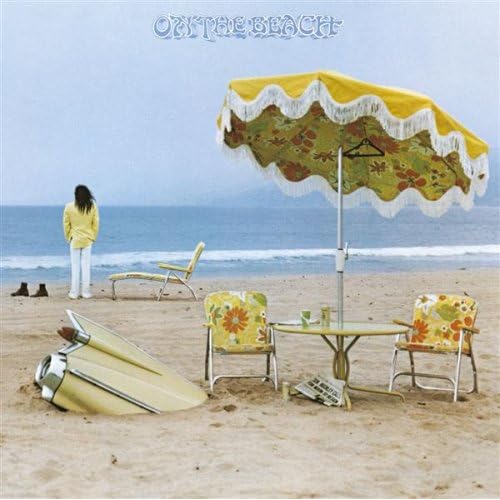
#5: Neil Young - On The Beach

Release Year: 1974

The first time I heard On The Beach, I thought the first half was brilliant.  "Walk On" is a great rock song, "For The Turnstiles" is a nice little banjo tune, and "Revolution Blues" is like an even better "Southern Man."

But this album really achieved greatness for me when I heard it while driving down the freeway in Phoenix late one night, while in a mellow state of mind, and "Motion Pictures (For Carrie)" came on.  A feeling of peaceful satisfaction came over me that lasted through the end of "Ambulance Blues."

The back side of this album was recorded while the band were consuming a marijuana-laced honey concoction, and the result is three mellow tracks with an abstract and tender quality not achieved anywhere else in his repertoire.

This record is a portrait of a man on his way out of the ditch.  This is an album about finding resolution in your toughest battles.

Standout tracks:
  • Revolution Blues
  • Ambulance Blues
  • Walk On

Sunday, September 18, 2011

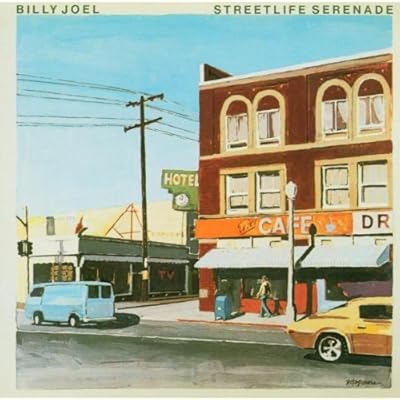
#36: Billy Joel - Streetlife Serenade

Release Year: 1974

For some reason, Streetlife Serenade is my favorite Billy Joel album. It doesn't have his most memorable songs, or greatest, songs.  But it seems to me like it has the most soul.  Like it's his most coherent album.

The best song here, and maybe the biggest hit, is "The Entertainer," which was made in response to the record company editing his single "Piano Man," and thereby messing with his art.

Pretty much every song on this album is solid.  The two instrumentals - the thoroughly upbeat piano romp "Root Beer Rag," and the latin-tinged closer "The Mexican Connection" - are two of his best.  It has a few excellent ballads, my favorite being "Roberta."

If you're the "Greatest Hits" type of Billy Joel fan and want to check out one of his albums, this is the first I'd recommend.

Standout tracks:
  • The Entertainer
  • Roberta
  • Streetlife Serenader
  • Root Beer Rag 

Saturday, September 10, 2011

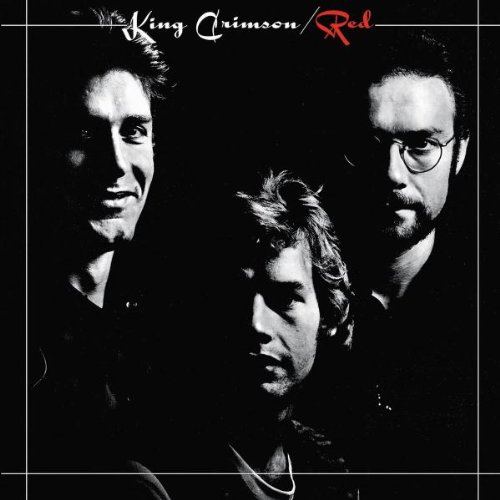
#43: King Crimson - Red

Release Year: 1974

King Crimson in the 70s was an interesting band.  Each album was stylistically completely different, and the lineup was a revolving door for musicians (only Robert Fripp was in the band throughout that whole era).  Red was their last album recorded before Fripp finally declared King Crimson to be "completely over for ever and ever," and it was actually released after they broke up.

This album is notable for being the only heavy Crimson album, and the only album they recorded as a trio.  Without any flutes, violins, saxophones, or other more classical instruments remaining, King Crimson took on a sound far more akin to the typical 1970s rock band.

Red still has many of the progressive elements that made earlier Crimson albums so interesting–the last two tracks in particular feature some improvisation–but I find it far more accessible than anything else they've done.  While it's not the most brilliant work they've done, it's a one-of-a-kind album in the King Crimson world, and probably the one I'd recommend for people who want to ease into the King Crimson way of doing things.

Standout tracks:
  • Fallen Angel
  • One More Red Nightmare 

Tuesday, November 23, 2010

Neil Young - On The Beach

Release Date: July 16, 1974
Label: Reprise

Every once in awhile, you dig up an old album and think, "Why did I not hear this earlier?"  This recently happened to me, so I decided to write about what is quickly becoming my favorite Neil Young album.

I first started listening to Neil Young as a Freshman in college, back in 2001.  The first album of his that I picked up was Harvest, and within a relatively short period of time, my collection had Everybody Knows This Is Nowhere, After the Gold Rush, Zuma, and Harvest Moon.  Each of these albums is completely different, which is what makes Young great.  His music covers the entire spectrum, covering everything from rock to blues to country to folk.  He has even dabbled in electronic music, and was highly influential in the "grunge" movement.  Neil Young will surely go down as one of the greatest musicians of our time.

After the success of Harvest in 1972, pressure mounted to write a successful follow-up, and during this time, Crazy Horse guitarist Danny Whitten died of a drug overdose after having been kicked out of the band.  This led to a stretch of albums known as "The Ditch Trilogy."  The first was a live album, Time Fades Away, which Neil considers a disaster, and remains the only Neil Young album not available on CD.  The second album he recorded, Tonight's The Night, was Neil's most pessimistic album, and would not be released until after On The Beach.

On The Beach was unavailable on CD until 2003, which may be part of why I personally never heard it while "discovering" Neil Young.  It was not commercially successful, but it is now widely considered to be one of Young's best albums.

It opens with a lively, straightforward rock song called Walk On.  This gives way to a remake of a song he did earlier, called See The Sky About To Rain.  The third song, Revolution Blues, is a classic Neil rocker, along the lines of Southern Man and Cowgirl In The Sand.  The fourth track is a weird little piece, For The Turnstiles, featuring Neil's banjo.  Rounding out the front side is Vampire Blues, a bluesy song about the blood sucking tendencies of the oil industry.

The back side is where it starts getting weird.  Neil and co. recorded these tracks while under the influence of a homemade marijuana concoction, leading to a much mellower feel for all three tracks.  Those tracks, On The Beach, Motion Pictures (For Carrie), and Ambulance Blues, all take on a looser, more free-form structure.  They are not as immediately grabbing, but after several listens, they start to grow on you.

Tracklist:
1Walk On2:41
2See the Sky5:02
3Revolution Blues4:03
4For the Turnstiles3:15
5Vampire Blues4:11
6On the Beach6:59
7Motion Pictures (For Carrie)4:23
8Ambulance Blues8:56

This album is solid.  And considering he followed it up with Tonight's The Night and Zuma, this has to be considered one of his best stretches.  It seems Neil Young went through some of his hardest times in the mid 70s, but it led to some of his best work.

★★★★