Showing posts with label progressive metal. Show all posts

Saturday, November 5, 2011

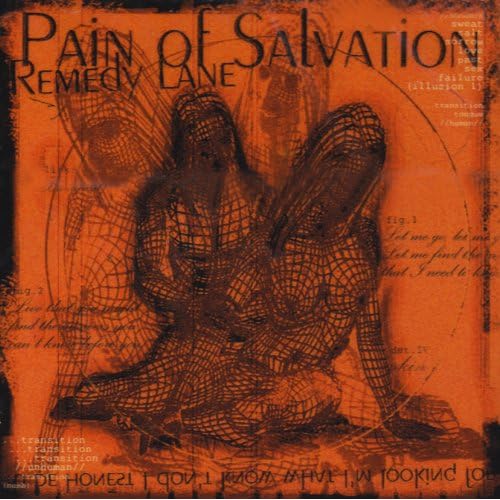
#2: Pain of Salvation - Remedy Lane

Release Year: 2002

Simply put, this album is perfect.  It has tightly structured songs, texture, dynamics, excellent melodies, and it is personal.  Here, Daniel Gildenlöw's melodramatic vocals shine, and his creativity and musicianship are in the forefront.

This is, in my mind, not just the greatest progressive metal album ever, but also the best metal album, and the best progressive rock album.

Since this album, Pain of Salvation hasn't made an album that can really be considered progressive metal.  Since Remedy Lane, each album seems to be an experiment with something new... Because once you've made a progressive metal album that can't be surpassed, why would you make another one?

Standout tracks:
  • A Trace of Blood
  • Ending Theme
  • Rope Ends
  • Waking Every God

Thursday, October 27, 2011

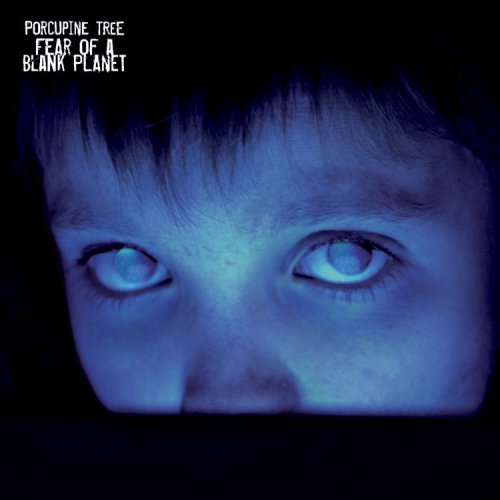
#8: Porcupine Tree - Fear of a Blank Planet

Release Year: 2007

Porcupine Tree has had a vibrant career, with a history of genre jumping.  The early days were psychedelic, and after a brief hiatus after Lightbulb Sun, they took up metal.  2007's Fear of a Blank Planet is like a look back at everything they had done up to that point, with apparent ties to many of their previous styles.

In describing the theme of this album, Steven Wilson stated, to paraphrase, that when he was growing up in the 1980s, the biggest issue society was facing was racial tensions, and one of the most important albums on that topic was Public Enemy's Fear of a Black Planet.  Now, race issues seem to be largely a thing of the past, but kids growing up in this age face a whole new set of problems related to proliferation of information.  As he related it, he didn't even know what pornography was until he was 16, but now it's a click away for most ten year olds.

Thus, all of the lyrics on this album deal with the subject of how our modern society is shaping adolescents.  The songs largely deal with overmedication, teenage angst, suicide, entitlement, etc.  Because I generally agree with his conjecture that the onslaught of information is one of the major circumstances that will determine where humanity goes in the future, I can really appreciate this album, even if its lyrics are fairly simple.  The message it conveys is not deep or mastered, but it is succinct.  It doesn't tell you how to think about the issues; it gets you to think about them.

But of course, the music is superb as well, or else I wouldn't have this in my top 10.  Gavin Harrison shines on drums, the textures are rich, the harmonies are as excellent as ever, and we have the most abstract Porcupine Tree has been since Signify.  And if you include the other tracks from the FoaBP sessions in your evaluation ("Normal," "What Happens Now?", "Nil Recurring," and "Cheating The Polygraph" were not included because Wilson felt they did not fit like he wanted them to), it's even more superb.

Standout tracks:
  • Fear of a Blank Planet
  • Anesthetize
  • Normal (technically from Nil Recurring) 

Wednesday, October 19, 2011

#14: Opeth - Blackwater Park

Release Year: 2001

I never thought I would ever like death metal... Until I heard Opeth.  There is no other band that better takes advantage of a loud/soft dynamic than this one, and this is their album that most seamlessly transitions between soft, idyllic folk passages and raging metal rampages.

Blackwater Park is notable for being the first Opeth album to feature Steven Wilson as producer, and his influence is profound.  Here we have a crisper, less murky Opeth, with keyboard parts and vocal harmonies.  The song "Harvest," in particular (featuring background vocals by Wilson), sounds like it could fit in perfectly well on a Porcupine Tree record.

Opeth is not your normal metal band.  There are long instrumental passages, extreme dynamics, and some songs without choruses (the closing song, the title track, features a 3-4 minute soft acoustic stretch in the middle that almost lulls you to sleep before returning as relentless as ever).  Blackwater Park is one of the greatest metal albums ever made.

Standout tracks:
  • Blackwater Park
  • Harvest
  • The Drapery Falls

Monday, October 10, 2011

#18: O.S.I. - Office of Strategic Influence

Release Year: 2003

In 2003, 9/11 was fresh on our minds, and one of the big sticking points was how much civil liberty we were willing to give up in order to achieve more security (or, some of us argue, the perception of more security).  Ex-Dream Theater keyboardist Kevin Moore was invited by Fates Warning guitarist Jim Matheos to collaborate on an album, and what we got was one of the most awesomely paranoid albums I've ever heard.

The term "Office of Strategic Influence" refers to the propaganda machine set up by the US government after the terrorist attacks.  The lyrics are centered around this theme, and indeed, the lyrics and music take on a somewhat sardonic tone, with Kevin Moore's signature sound bites topically spread throughout.  This is an excellent protest album: it does not come across as trite, shallow, or even angry, but instead more sarcastic.

Besides Moore and Matheos, this album features ex-Dream Theater drummer Mike Portnoy, some melodies and lyrics by Daniel Gildenlöw, a song featuring lyrics and vocals by Steven Wilson, and another guest or two.

This album is a perfect mix of heavy and atmospheric, and the vast difference in styles between the respective projects led by Moore and Matheos yields a very diverse and interesting album; yet, it still manages to stay true to its specific theme.

Standout tracks:
  • Head
  • Dirt From A Holy Place
  • When You're Ready
  • shutDOWN 

Tuesday, October 4, 2011

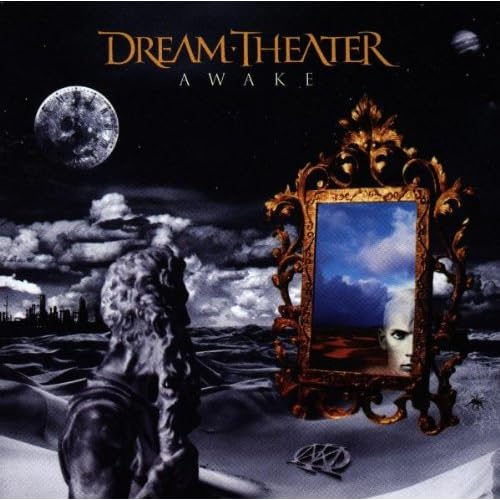
#22: Dream Theater - Awake

Release Year: 1994

A lot of people accuse Dream Theater of being pretentious.  That they are nothing more than a bunch of showoffs trying to fit as many notes into each measure as possible.  They are certainly guilty of that at times (especially after the departure of Kevin Moore), but I cannot deny that Awake is a solid album, and Dream Theater's musical pinnacle.

This album flows just right, from the first song to the last.  There is certainly musical virtuosity here, but none of it seems out of place.  The long songs don't seem unnecessarily long, nor do they lack direction.  The musicians are technical, but here they can actually be described as "progressive."

This album has strong dynamics, interesting rhythms, and memorable memories.  After Awake, Kevin Moore would leave the band, and they never quite had the same creative spark.

Standout tracks:
  • Scarred
  • Voices
  • Space-Dye Vest
  • 6:00 

Friday, September 30, 2011

#25: Pain of Salvation: BE

Release Year: 2004

In 2005, I was heavily into the progressive metal scene, and one of the bands that had a small, but devout, following was Pain of Salvation.   This was their most recent album at the time, so I decided to check it out... And I didn't like it.  I found it overindulgent, and lacking any real structure.

Two years later, I finally decided to check out some of their other work, and I liked it.  I went back to BE, and perhaps I was just in a different place, but I liked it.  It is still overindulgent and lacking any real structure, but it is awesome.  I think Daniel Gildenlöw has earned the right to be overindulgent.

BE is a concept album about the existence of God and humankind.  All of the track titles are in a sort of pseudo-Latin, referencing the classic language of theological discourse.  The music is incredibly varied, with styles ranging from spoken word, to Medieval folk, to metal, to straight piano.  There are really only five to seven normally-structured songs, connected by thematic instrumentals or limited-vocal pieces.

For this album, Gildenlöw wrote a complete score.  The metal parts blend tastefully with the orchestra, and it gives it a depth that does not feel at all contrived.  The more I listened to this album, the more I found that the transitions are not filler, but nicely tie the album together.

There are two highlights for me: first, the track "Vocari Dei," which the band created by setting up an answering machine and instructing their fans to talk to the machine as if they were talking to God (and the result is a thoroughly enlightening pastiche of pleas from skeptics, believers, upset people, worried people, children, and apologetic people); and finally, the track "Iter Impius," which is an incredibly beautiful song about a man who is the sole human being wealthy enough to survive human extinction, just to find that he bought loneliness on a barren planet.  This is one of my favorite songs ever.

I will admit, I have not immersed myself in this album enough to really understand what it's about, but if you want to be challenged, this is a great record.

Standout tracks:
  • Iter Impius
  • Vocari Dei
  • Lilium Cruentus
  • Nihil Morari 

Thursday, September 22, 2011

#32: Porcupine Tree - In Absentia

Release Year: 2003

Yes, I know this is the third Porcupine Tree album I've picked, but considering (a) they've been one of my favorite bands since 2005 and (b) Steven Wilson has always been a believer in the album as an art form, you'd expect them to have several outstanding albums.

 In Absentia marked a radical change in direction for Porcupine Tree.  Steven Wilson had just finished producing a couple of Opeth albums, which are, of course, progressive death metal.  Wilson cited this experience as something that rekindled his love of metal, so what we got here is the first "metal" PT album, and one that alienated a lot of older fans, but was very well-received in the prog metal crowd.

The great thing about this album is that, despite its easily being the loudest PT record in existence, it is still as melodic, if not more melodic, than their previous work. The guitars are much louder and in-your-face, and the drums are more technical (thanks to the addition of drummer Gavin Harrison), but there are still cool bass grooves, layered vocals, and lots and lots of atmosphere.

Besides the overall sound, it's just a great collection of songs.  Some of them could have been hits if they had a record company with deep enough pockets.

Standout tracks:
  • Trains
  • Prodigal
  • The Sound of Muzak
  • .3 

Tuesday, September 20, 2011

#34: Oceansize - Effloresce

Release Year: 2003

Every once in awhile, you run into a band that did it right the first time out.  Oceansize is one of those bands.  Oceansize, from Manchester, England, released four full length albums and at least two EPs before breaking up earlier this year.

Oceansize was generally labeled as progressive rock, though they don't really have anything in common with most bands in that umbrella.  They do tend to write lengthy songs, which in the early days had some jam tendencies, with repeated riffs, and lots of build ups.  Their last couple of albums, Frames and Self-Preserved While The Bodies Float Up, feature more chaotic arrangements.  Everyone Into Position was probably their tightest record, but Effloresce is my favorite.  This album just features so many great melodies and instrumental sections that it's almost overwhelming.  They hit the perfect spot on their first album, and while the others were unique, to be sure, this one has the best combination of experimentation and structure.

These guys are loud when they need to be, and quiet when they need to be.  If you like a good, dynamic album, this is a great choice.  Oceansize were excellent musicians, and one of the most underrated bands of the 2000s.

Standout tracks:
  • Saturday Morning Breakfast Show
  • Amputee
  • Catalyst
  • One Day All This Could Be Yours 

Saturday, September 10, 2011

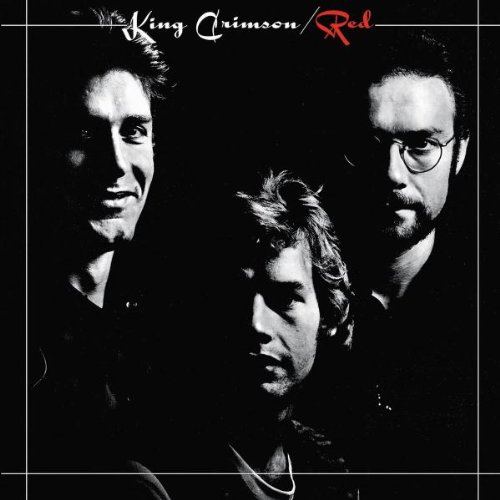
#43: King Crimson - Red

Release Year: 1974

King Crimson in the 70s was an interesting band.  Each album was stylistically completely different, and the lineup was a revolving door for musicians (only Robert Fripp was in the band throughout that whole era).  Red was their last album recorded before Fripp finally declared King Crimson to be "completely over for ever and ever," and it was actually released after they broke up.

This album is notable for being the only heavy Crimson album, and the only album they recorded as a trio.  Without any flutes, violins, saxophones, or other more classical instruments remaining, King Crimson took on a sound far more akin to the typical 1970s rock band.

Red still has many of the progressive elements that made earlier Crimson albums so interesting–the last two tracks in particular feature some improvisation–but I find it far more accessible than anything else they've done.  While it's not the most brilliant work they've done, it's a one-of-a-kind album in the King Crimson world, and probably the one I'd recommend for people who want to ease into the King Crimson way of doing things.

Standout tracks:
  • Fallen Angel
  • One More Red Nightmare 

Sunday, September 19, 2010

Pain of Salvation - Remedy Lane

Release Date: January 15, 2002
Label: Inside Out Music


Anybody who has discussed music with me in any reasonable portion knows that one of my favorite bands is Pain of Salvation.  Pain of Salvation, led by Daniel Gildenlow, together with Johan Hallgren, Fredrik Hermansson, and, at the time of this release, Kristoffer Gildenlow and Johan Langell, are a progressive metal outfit from Eskiltuna, Sweden.  They have a history of melodramatic vocals, syncopated rhythms, dynamics, and concept albums.

 Remedy Lane is Pain of Salvation's fourth, and greatest, album.  It is about a man's journey to discover himself, and is considered to be Gildenlow's most personal work.  Many of the songs are written from his own personal experience, rather than being mere observations of the world at large.

Lyrically, Remedy Lane contains some of Gildenlow's best work.  "A Trace of Blood" is about the time his wife miscarried their first child, and is one of the most heartfelt heavy metal tracks I've heard.  "This Heart Of Mine" was a love song he wrote for his wife.  "Rope Ends," which has a little bit of dark humor in its use of "Winnie the Pooh" characters in the imagery, was apparently inspired by his wife's friend's suicide attempt.

1Of Two Beginnings2:23
Chapter I
2Ending Theme4:59
3Fandango5:51
4A Trace of Blood8:17
5This Heart of Mine (I Pledge)4:00
Chapter II
6Undertow4:49
7Rope Ends7:02
8Chain Sling3:58
9Dryad of the Woods4:56
Chapter III
10Remedy Lane2:15
11Waking Every God5:19
12Second Love4:21
13Beyond the Pale9:56 

Musically, Remedy Lane is about as good as progressive metal can get.  It is technical, but not over the top.  It has two ballads, in "This Heart Of Mine" and "Second Love."  It has beautiful harmonies in the choruses.  One of my favorite tracks, "Rope Ends,"  starts off with a heavy, choppy power chord rhythm, flows into a smoother, faster bridge, and a slower chorus; the instrumental section breaks down into a syncopated guitar-and-keyboard part, feeds into an interesting section in 7/8 time, and a pretty good guitar solo.

If you're not familiar with progressive metal, this is a great place to start.  If you are, and you haven't heard this... What is wrong with you?

★★★★