Showing posts with label british. Show all posts

Tuesday, July 24, 2012

Halfway Through 2012...

We're over half way through the year... I figured I'd rank all the new albums I've heard so far.

1. Lost In The Trees - A Church That Fits Our Needs

Emotional.  Rich.  Textured.  Atmospheric.  It's hard to find enough words to describe how beautiful this album is.  It's a perfect tribute to Ari Picker's late mother.  It's simultaneously sad and uplifting.  Rarely do you find an album with such a coherent bond between the lyrics and the music.  Here, Picker proves he's an expert in tone.


2. Punch Brothers - Who's Feeling Young Now?

I initially met this album with trepidation, since their previous album is one of my favorites, and I wasn't too keen on the first track, which was released online a few weeks before the full album.  But here they've proven that they can make music that is more accessible, but just as interesting... While staying true to their acoustic instruments.  

3. Anathema - Weather Systems

This is excellent prog rock.  It takes you through a range of emotions, it is intricately constructed (listen to the layered vocals on "The Gathering of the Clouds" in surround sound, and prepare to be blown away), and it just gets better with each listen.

4. Edward Sharpe & The Magnetic Zeros - Here

I'm probably in the minority, but I like this better than their previous record.  It doesn't have a hit song, but it does a great job capturing a traditional revival feel.

5. Great Lake Swimmers - New Wild Everywhere

Nice sincere folk rock.  All of the songs are pretty good, and there are some nice, catchy melodies here.

6. Of Monsters And Men - My Head Is An Animal

This is a fun listen.  Lots of bombast; probably closer to the first Edward Sharpe album than the new Edward Sharpe album is.  

7. Darrell Scott - Long Ride Home

Darrell is one of my favorite songwriters, and here we see him making back porch country music.  Simple, honest, and genuine.

8. The Tallest Man On Earth - There's No Leaving Here

I was never the biggest fan of this guy, but he does have an interesting Dylan-esque quality, and I like the acoustic guitar.

9. Bela Fleck & The Marcus Roberts Trio - Across The Imaginary Divide

Saw these guys at Telluride Bluegrass, and was impressed.  It's like a very tight jazz ensemble with a banjo.

10. Leftover Salmon - Aquatic Hitchhiker

I haven't been able to fully digest this one yet, but there are some quality cuts here.


Other albums I like that didn't make my top 10 yet:
Old Crow Medicine Show - Carry Me Back
Farrar, Johnson, Parker, Yames - New Multitudes
Justin Townes Earle - Nothing's Gonna Change The Way You Feel About Me Now
Carolina Chocolate Drops - Leaving Eden
Trampled By Turtles - Stars And Satellites
Rhett Miller - The Dreamer
Andrew Bird - Break It Yourself

Monday, June 11, 2012

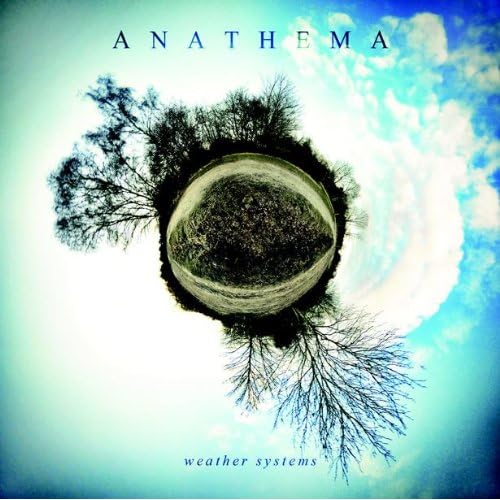
Anathema - Weather Systems

Release Date: April 16, 2012
Label: Kscope


Let me tell you about Anathema.  They are a British prog rock band that started off playing doom metal.  Their past alone is probably enough to turn off most prospective listeners ("you want me to check out a doom metal band???), and their present is enough to turn off most doom metal fans, so they are in an interesting position, as far as niche is concerned.


I first heard Anathema several years ago, when I was in my prog metal phase.  The record I heard was A Natural Disaster, which surprised me with its overall mellowness and delicacy.  There really isn't anything metal about Anathema anymore.  I more recently heard We're Here Because We're Here, which I wasn't totally impressed with, despite its relative popularity.  Nevertheless, when I saw that Weather Systems was due, I went ahead and ordered the vinyl.

After a few listens, I was floored.  This might be even better than A Natural Disaster.  The record starts off with a split track, "Untouchables," with a hard first half and a more delicate second half.  This is followed by another pair of songs that flow into each other, "The Gathering of the Clouds," and "Lightning Song."  "Gathering" is a fine specimen of layered vocals and effective buildup, and by the time it climaxes and segues into "Lightning Song," it is difficult to resist the urge to start pumping your fists.

Another highlight is "The Storm Before the Calm," which features one of my favorite prog tropes: tearing down the song after a few verses, and building it back up again with more grandeur than before.

Really, this whole record is solid.  So solid that I decided to purchase the surround sound edition, which I had the chance to spin for the first time today.  The sound is more crisp, with more separation between the concrete musical instruments and more abstract atmospheric elements.  The layered vocal parts especially shine; in "The Gathering of the Clouds," I heard vocal lines I hadn't heard even after a dozen or so listens.

If you're a prog rock or art rock fan, check this out.  If you're not... Well, there still might be cuts you really like.  This music is really difficult to categorize.

★★★★

Wednesday, November 2, 2011

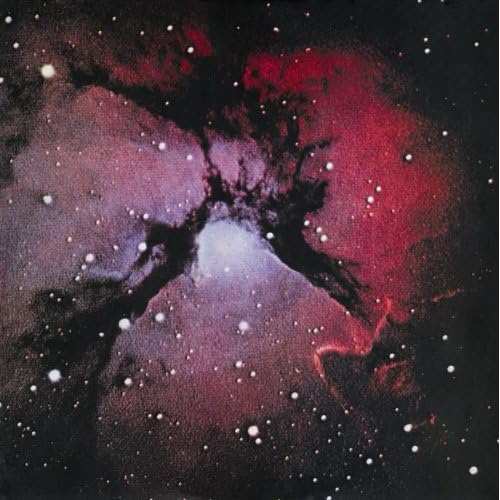
#3: King Crimson - Islands

Release Year: 1971

Islands is regrettably considered by many critics to be King Crimson's worst album from the first era.  I, for the life of me, can't figure out how anyone can appreciate King Crimson, yet consider an album with "Formentera Lady", "Islands," and especially "Sailor's Tale" to be subpar.

This album is definitely different.  It has more flute, saxophone, and mellotron than electric guitar.  It has many delicate passages, and if you're listening to it while driving, you're going to miss half the music.

Islands also features Boz Burrell on vocals, one of my favorite King Crimson singers.  Burrell brought a dynamic to the band that fits this album like a glove; it's hard to imagine anybody else taking his place.

It really doesn't bother me that Islands is not very popular.  I myself didn't fully appreciate it until I heard it in surround sound.  This album is 40 years old, and nobody has dared make anything else like this.  Not even King Crimson.

Standout tracks:
  • Ladies of the Road
  • Sailor's Tale
  • Islands 

Thursday, October 27, 2011

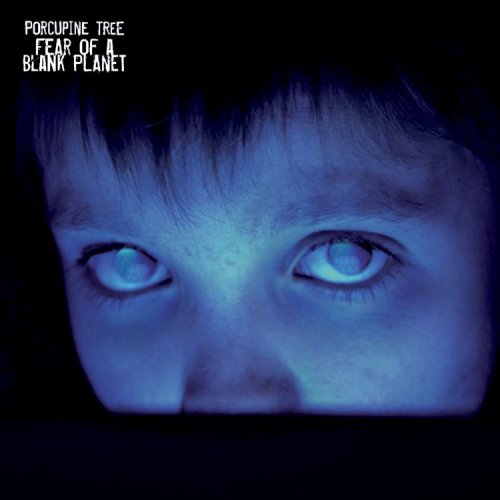
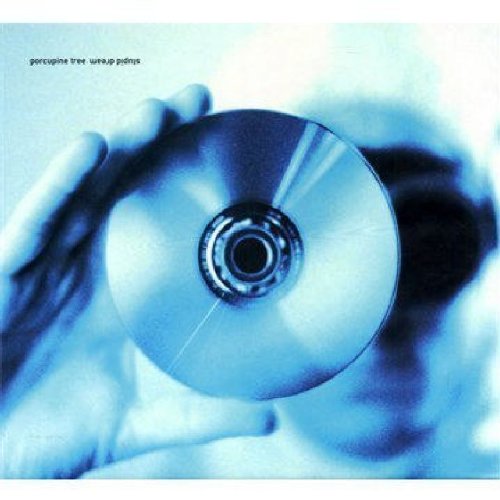
#8: Porcupine Tree - Fear of a Blank Planet

Release Year: 2007

Porcupine Tree has had a vibrant career, with a history of genre jumping.  The early days were psychedelic, and after a brief hiatus after Lightbulb Sun, they took up metal.  2007's Fear of a Blank Planet is like a look back at everything they had done up to that point, with apparent ties to many of their previous styles.

In describing the theme of this album, Steven Wilson stated, to paraphrase, that when he was growing up in the 1980s, the biggest issue society was facing was racial tensions, and one of the most important albums on that topic was Public Enemy's Fear of a Black Planet.  Now, race issues seem to be largely a thing of the past, but kids growing up in this age face a whole new set of problems related to proliferation of information.  As he related it, he didn't even know what pornography was until he was 16, but now it's a click away for most ten year olds.

Thus, all of the lyrics on this album deal with the subject of how our modern society is shaping adolescents.  The songs largely deal with overmedication, teenage angst, suicide, entitlement, etc.  Because I generally agree with his conjecture that the onslaught of information is one of the major circumstances that will determine where humanity goes in the future, I can really appreciate this album, even if its lyrics are fairly simple.  The message it conveys is not deep or mastered, but it is succinct.  It doesn't tell you how to think about the issues; it gets you to think about them.

But of course, the music is superb as well, or else I wouldn't have this in my top 10.  Gavin Harrison shines on drums, the textures are rich, the harmonies are as excellent as ever, and we have the most abstract Porcupine Tree has been since Signify.  And if you include the other tracks from the FoaBP sessions in your evaluation ("Normal," "What Happens Now?", "Nil Recurring," and "Cheating The Polygraph" were not included because Wilson felt they did not fit like he wanted them to), it's even more superb.

Standout tracks:
  • Fear of a Blank Planet
  • Anesthetize
  • Normal (technically from Nil Recurring) 

Wednesday, October 26, 2011

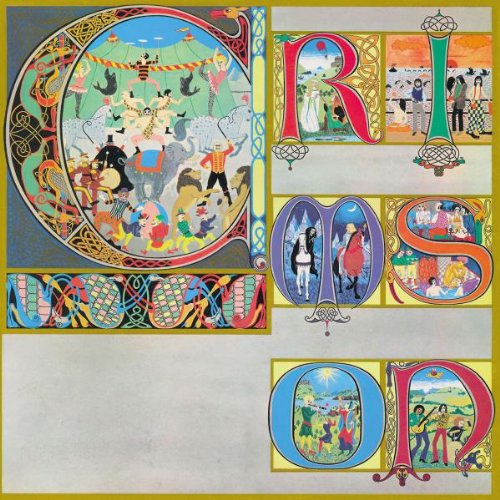
#9: King Crimson - Lizard

Release Year: 1970

In the very late 60s and early 70s, King Crimson became notable for their ability to blend jazz and classical stylings into their music.  Lizard is easily their jazziest record.

Some people don't like Lizard.  This is understandable, but they are missing out on one of the greatest albums ever made.  This album goes from weird, to more weird, to serene, and ends at epic.  It has everything from seeming nonsense, chaos, a coded song about the breakup of The Beatles, guest vocals by Jon Anderson, and a killer English horn solo (arguably my favorite English horn solo).

As if this album weren't great enough already, it is even more incredible when heard in Steven Wilson's 5.1 surround sound mix.  All of the King Crimson 40th Anniversary Editions are good, but this is one of the albums that benefits the most from the 5.1 treatment.

Listen to this one if you like the weird, jazzy, or classical.  If you want rock songs, look elsewhere.

Standout tracks:
  • Lizard
  • Indoor Games

Tuesday, October 25, 2011

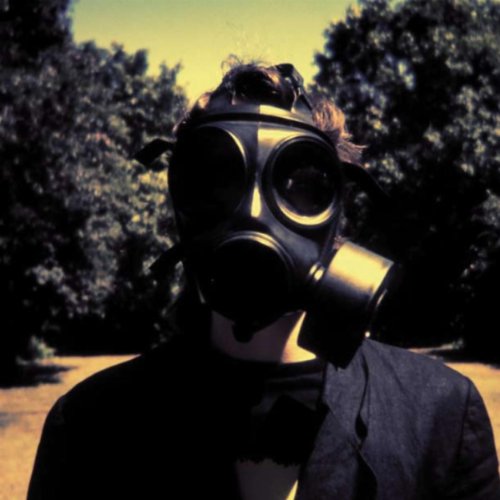
#10: Steven Wilson - Insurgentes

Release Year: 2008

Steven Wilson is probably my favorite musician, and his work in 2007-2008 is probably why.  In this general time period, he was involved in Porcupine Tree's Fear of a Blank Planet, Blackfield's II, and this, his first solo album.

Insurgentes was named after the main drag in Mexico City where this was recorded, and it is more textured, abstract, and electronic than his Porcupine Tree work.  You'll find more variety here than in any of his countless other projects, from straightforward rock ("Harmony Korine"), to loud and discordant ("Salvaging"), to ambient ("Veneno Para Las Hadas," "Twilight Coda"), to killer bass groove ("No Twilight Within The Courts Of The Sun"), to wall-of-sound (the end of "Get All You Deserve").

This is one of those albums I can listen to nonstop.  It was Wilson's most ambitious work to date, and easily his most beautiful.  At the time, it was also one of the finest sounding albums I had heard, and has only since been matched by some of the other albums he has mixed.

PS: I should note that I think his new solo album, Grace For Drowning, is even better, but since it was released only a month ago, I'm not going to include it.  Just know that it's probably going to be in my top ten when the dust settles.

Standout tracks:
  • Harmony Korine
  • No Twilight In The Courts Of The Sun
  • Significant Other

Tuesday, October 18, 2011

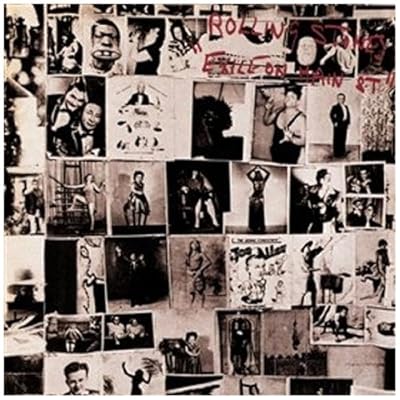
#15: Rolling Stones - Exile On Main Street

Release Year: 1972

The Stones had a lot of great albums, but this one came at the peak of their career in the early 1970s.  There is just something about this album that is the epitome of everything that was great about both the Rolling Stones and the early 70s.  You won't find a lot of complex songs structures here: what you will find is a vibrant collection of completely enjoyable rock and roll songs.

Exile didn't yield a lot of hits relative to other Rolling Stones albums... Yet, this is probably their best, and most unassuming collection of songs.

If you can have only one Rolling Stones album in your collection, this would have to be your best option.  This album is what rock and roll was all about.

 Standout tracks:
  • Sweet Virginia
  • Tumbling Dice
  • Rocks Off
  • Happy 

Wednesday, October 5, 2011

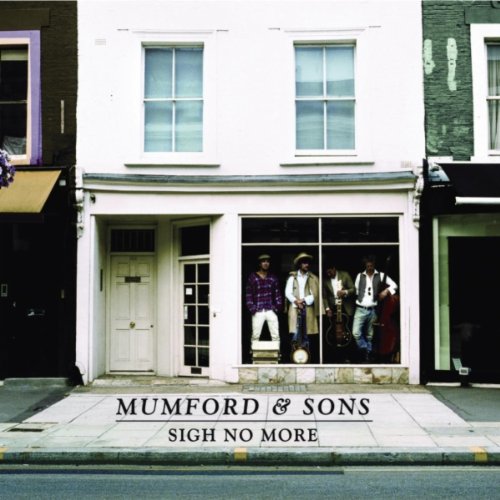
#21: Mumford & Sons - Sigh No More

Release Year: 2010 (2009 UK)

Typically, I don't like music that is really popular.  It's not that I'm an ideological contrarian; it's more that the characteristics I value in an artist are usually not valued by the world at large.  But every now and then, something I like happens to become really popular, for one reason or another.

I actually purchased this album before it was officially released in the US.  I spun it probably dozens of times before they really started to pick up steam in the states.  There's nothing particularly new about this record; other artists in the West London folk scene (e.g., Laura Marling, Noah and the Whale, Johnny Flynn, et al) were already doing the "intelligent hipster folk" thing.  But Mumford & Sons took that style and injected an extra level of energy in their music, and the result is something that maintains the same musical quality, but is considerably more accessible.

This is one of the albums that is really pushing acoustic music to new levels of popularity.  Considering most of the new artists I've been listening to in the past two years are similarly acoustic, I really can't complain about their popularity.

Standout tracks:
  • Awake My Soul
  • Winter Winds
  • The Cave 
  • Thistle & Weeds

Monday, October 3, 2011

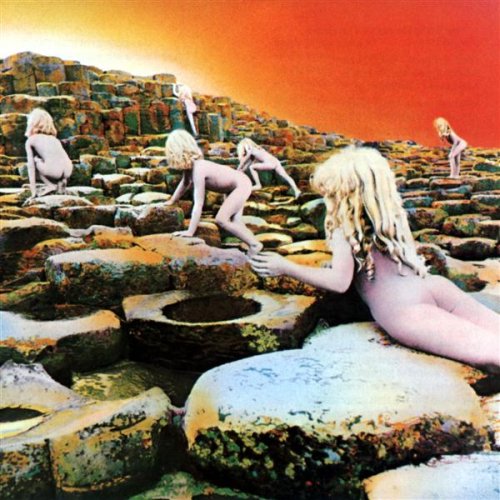
#23: Led Zeppelin - Houses of the Holy

Release Year: 1973

Led Zeppelin's fourth album, IV (or ZOSO or Untitled or whatever you choose to call it), gets most of the attention, but Houses of the Holy is easily my favorite Zep record.  There's just something about the record that makes it stand out, and I think it is "The Rain Song" and "No Quarter."

These happen to be my two favorite Zeppelin songs. "The Rain Song" is stunningly beautiful...I love everything about it.  The way the choruses hit you is just perfect.  And "No Quarter" might be the most creative and artistic Led Zeppelin ever got.

This album is just solid from start to finish.

Standout tracks:
  • The Rain Song
  • No Quarter
  • Over The Hills And Far Away 

Sunday, October 2, 2011

New Release: Steven Wilson - Grace For Drowning

Release Date: September 26, 2011
Label:  KScope

Having received my much-awaited Grace For Drowning vinyl and deluxe edition mail orders, and allowing a few listens to set in, I feel compelled to provide my thoughts on this excellent new record.  Steven Wilson is the lead singer, songwriter, producer, and creative genius behind the progressive rock/metal band Porcupine Tree, and has been involved with many other projects (as both musician, producer, and general sound expert), including Blackfield, Opeth, and, notably, the new 40th anniversary King Crimson remasters.  It is the latter project that clearly had the most influence over the outcome of his new sophomore solo record.

I shall break this up into a few broad attributes.

Packaging
Grace For Drowning vinyl edition
I bought both the vinyl and the deluxe blu-ray edition.  The vinyl is a standard double gatefold, with printed sleeves and 180g black vinyl.  This is what I listened to first, and it is an impressive package, but not any more so than similar vinyl releases.

The deluxe edition, running at a cool $80 plus shipping, is truly impressive.  This version comes with both discs of Grace For Drowning, and bonus disc with demos and outtakes, and a blu-ray disc containing 5.1 and stereo mixes of the album, videos, a couple of bonus tracks, photos, and handwritten lyrics.  I haven't had a chance to watch all of the videos, but the ones I've seen do songs justice, and fit their dark mood, as is typical of Lasse Hoile-directed videos.

Grace For Drowning deluxe edition
The deluxe edition is housed in a 120-page hardcover book, whose cover is fitted with embossed denim.  They certainly did not skimp on quality here.  The book's 120 pages - yes, there are really 120 pages - are photos that I'm assuming are thematic, interspersed with lyrics and reproductions of handwritten notes.  I don't know where all these photos came from, but it looks like almost as much work could have been put into the design of this edition as the music itself.  Steven Wilson considers the album artwork to be, along with the actual music, one of the critical components of an album, and this album artwork is as breathtaking as any I've seen.

Sound
I mentioned that Wilson is hot off his work on King Crimson's 40th Anniversary Editions, and these song truly phenomenal.  The new 5.1 remixes of those albums are largely responsible for my renewed appreciation for Lizard and Islands.  Thus, it is only appropriate for this album to include a 5.1 edition.

The great thing about this is the 5.1 mix doesn't make the album.  It still sounds spectacular in stereo; you don't even really need the 5.1 mix to appreciate the incredible aural experience this album offers.  What the 5.1 mix brings to the table is a little more subtle; Wilson essentially brings you, the listener, into the room by moving atmospheric elements and some vocals to the rear channels.  There is more separation between the sounds.  The blu-ray edition really shines during the quiet parts of the album, when there are but a few instruments, and you are not limited to the dynamic range compressed stereo CDs have.  A perfect example of this is the final track, "Like Dust I Have Cleared From My Eye."  You hear Wilson in the center channel, the piano in the rear, guitar chords in the front, some occasional strumming in the rear, and layered background vocals all around you.

Even if you don't buy the $80 deluxe edition, it is still worthwhile to have the blu-ray disc, when can be bought separately for about $15 on Amazon.

The Actual Music
Obviously the music is the most important part of any album, and there is no disappointment in this regard.  Grace For Drowning is far more ambitious than Wilson's debut solo album, Insurgentes, which is sometimes a recipe for trouble.  There is always the risk of coming across as overindulgent, and sometimes music just needs to be simple.

Fortunately, Wilson took a new approach here: he made two separate albums, Deform to Form a Star, which comprises the first disc, and Like Dust I Have Cleared From My Eye, which comprises the second disc.  He intended for these albums to be digested separately.  The first, Deform, is more structured, less ambitious, and contains a few beautifully simple songs (e.g., "Postcard").  The disc starts out with the delicate title track, whose vocals are limited to some layered la's.  The second track, "Sectarian," is a wonderfully discordant and rhythmic instrumental.  This starkly contrasts to the Insurgentes, which began with the catchiest song on the album, "Harmony Korine."  The effect here is that after ten minutes of textured music, the soft vocals become far more profound when the track "Deform to Form a Star" begins.

The second disc/album is more abstract and ambitious.  The centerpiece is a very Lizard-esque epic track entitled "Raider II."  The onset of this track seems to give a deliberate nod to Lizard, with its vocal melody and style that is very reminiscent of the beginning of Lizard's first track, "Cirkus."  This influence is noticeable throughout the entire album; for this record, Wilson employed several jazz musicians, and there are saxophone and flute parts scattered about.  Given the fact that Lizard is one of my favorite albums, this is a welcome influence.

The reason I like the way the albums are divided, is that if the whole album is a bit too much for you, you can simply stick to the first sub-album.  This disc alone offers enough depth to keep you occupied for some time.  When you feel like you're done absorbing the first disc, you can then move on to the second.

I don't know where this album will settle after I've had months to digest it, but my initial impression, after three listens, is that it's the best thing I've heard in some time, and it's Wilson's best work, which is a high mark indeed.  

This album, perhaps more than any album I've heard, offers the complete package.  It is pure art in every form.  It has excellent music, great photography, beautiful videos, and amazing sound.  Regardless of whether this is your preferred style of music, you can't help but be amazed by Wilson's ability to put all this together.  


★★★★

Thursday, September 22, 2011

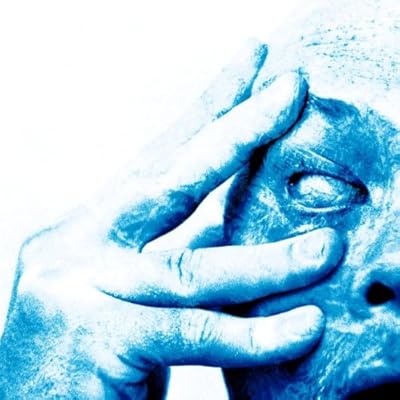
#32: Porcupine Tree - In Absentia

Release Year: 2003

Yes, I know this is the third Porcupine Tree album I've picked, but considering (a) they've been one of my favorite bands since 2005 and (b) Steven Wilson has always been a believer in the album as an art form, you'd expect them to have several outstanding albums.

 In Absentia marked a radical change in direction for Porcupine Tree.  Steven Wilson had just finished producing a couple of Opeth albums, which are, of course, progressive death metal.  Wilson cited this experience as something that rekindled his love of metal, so what we got here is the first "metal" PT album, and one that alienated a lot of older fans, but was very well-received in the prog metal crowd.

The great thing about this album is that, despite its easily being the loudest PT record in existence, it is still as melodic, if not more melodic, than their previous work. The guitars are much louder and in-your-face, and the drums are more technical (thanks to the addition of drummer Gavin Harrison), but there are still cool bass grooves, layered vocals, and lots and lots of atmosphere.

Besides the overall sound, it's just a great collection of songs.  Some of them could have been hits if they had a record company with deep enough pockets.

Standout tracks:
  • Trains
  • Prodigal
  • The Sound of Muzak
  • .3 

Tuesday, September 20, 2011

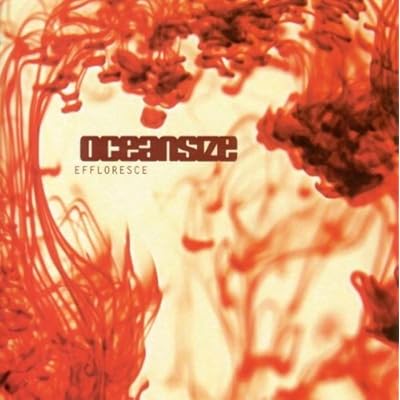
#34: Oceansize - Effloresce

Release Year: 2003

Every once in awhile, you run into a band that did it right the first time out.  Oceansize is one of those bands.  Oceansize, from Manchester, England, released four full length albums and at least two EPs before breaking up earlier this year.

Oceansize was generally labeled as progressive rock, though they don't really have anything in common with most bands in that umbrella.  They do tend to write lengthy songs, which in the early days had some jam tendencies, with repeated riffs, and lots of build ups.  Their last couple of albums, Frames and Self-Preserved While The Bodies Float Up, feature more chaotic arrangements.  Everyone Into Position was probably their tightest record, but Effloresce is my favorite.  This album just features so many great melodies and instrumental sections that it's almost overwhelming.  They hit the perfect spot on their first album, and while the others were unique, to be sure, this one has the best combination of experimentation and structure.

These guys are loud when they need to be, and quiet when they need to be.  If you like a good, dynamic album, this is a great choice.  Oceansize were excellent musicians, and one of the most underrated bands of the 2000s.

Standout tracks:
  • Saturday Morning Breakfast Show
  • Amputee
  • Catalyst
  • One Day All This Could Be Yours 

Monday, September 19, 2011

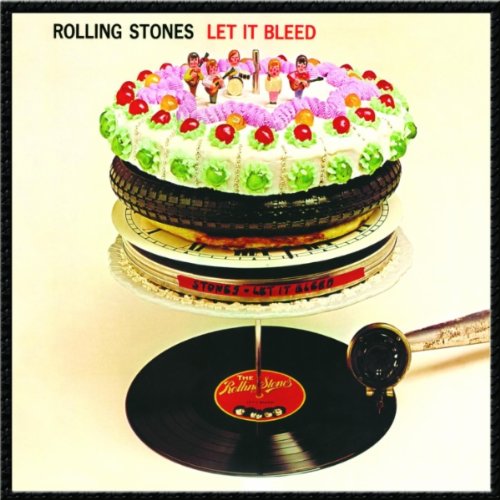
#35: The Rolling Stones - Let It Bleed

Release Year: 1969

In the 1960s, The Rolling Stones were a great band.  When you think of the 60s, that are really two bands that come to mind: The Beatles, and The Rolling Stones.  In my mind, the Stones were the greatest band of the decade, not the Beatles.  Despite that, the best stretch of Stones albums came from 1968 through 1973, starting with Beggar's Banquet.  Let It Bleed is the following album, and a very solid album indeed.

This album has it all: a classic opening song in Gimme Shelter, 60s punk like Live With Me, the monumental closer You Can't Always Get What You Want, and even a little honky tonk in Country Honk.  This album is still decidedly 60s, but you can hear the 70s creeping in.

 It's difficult to explain what is so good about the Stones; the songs are simple.  Compared to the burgeoning progressive rock movement, there really wasn't very much to it.  Really, it's just rock and roll.

Standout tracks:
  • You Can't Always Get What You Want
  • Midnight Rambler
  • Let It Bleed
  • Monkey Man 

Thursday, September 15, 2011

#38: Porcupine Tree - Signify

Release Year: 1996

Porcupine Tree is a band that had several distinct eras.  Signify came at the tail end of their psychedelic period, and featured more structure than Up The Downstair or The Sky Moves Sideways, but still was about half instrumental.

This is my favorite Porcupine Tree prior to their 2001-or-so hiatus.  The atmosphere is excellent, the songwriting is superb, and, as you would expect from psychedelic rock music, there are some great bass grooves.

There are really only five songs with lyrics and singing, and that's kind of what makes this awesome.  You have songs like "Waiting Phase One" with a nice vocal melody, followed up with "Waiting Phase Two," which is just an instrumental continuation of the same bass groove.  You have songs like "Every Home Is Wired," which is an early display of Steven Wilson's superior vocal layering technique.  And, finally, you have the last one, "Dark Matter," which is one of my top 5 Porcupine Tree songs, and one I never, ever get sick of hearing.

This is not the first Porcupine Tree album you should listen to, but it one of the best.

Standout tracks:
  • Dark Matter
  • Waiting Phase One
  • Idiot Prayer
  • Every Home Is Wired 

Monday, September 12, 2011

#41: Porcupine Tree - Stupid Dream

Release Year: 1999

Most people I talk to have never heard of Porcupine Tree.  And that's quite unfortunate, because they're an amazing band.  Steven Wilson is one of the geniuses of modern music, and one of the rare musicians with an appreciation of the more artistic aspects of music.  Each Porcupine Tree album is truly an album, with songs that belong only on that album.  Wilson has been known to exclude great tracks simply because they do not fit the motif he is shooting for.

Stupid Dream is the first Porcupine Tree album after they left behind their psychedelic phase, and the songs take a more conventional structure than any of their previous work.  Here you have music that has tight melodies, and a relatively limited amount of instrumental stretches.  It still manages to maintain a little bit of its psychedelic influence, however, with some very tight bass grooves in songs like "Slave Called Shiver" and "Don't Hate Me."

I'll just let Mr. Wilson explain what I just wrote:
The main source of the shift in sound came from a natural move into the realms of songwriting and away from the more abstract instrumentally based material of previous albums. I was particularly under the spell of Brian Wilson, but also listening to artists like Jeff Buckley, Soundgarden and (the incredibly over rated but still rather good) Radiohead. Also for the first time the album was recorded in one extended period (rather than sporadically as with previous albums) in a remote residential studio in Wales, where the band were able to experiment and collaborate on a cohesive sound for the album. Consequently the album contains our most vertically complex music, as opposed to horizontally complex (whereby the tracks comprise simple sections, but many of them strung together). Here the songs are relatively tightly structured but much more layered than anything we had attempted before.
Do yourself a favor and check out this band, and this album is probably a good one to start with.

Standout tracks:
  • Even Less
  • Slave Called Shiver
  • Don't Hate Me
  • Pure Narcotic 

Saturday, September 10, 2011

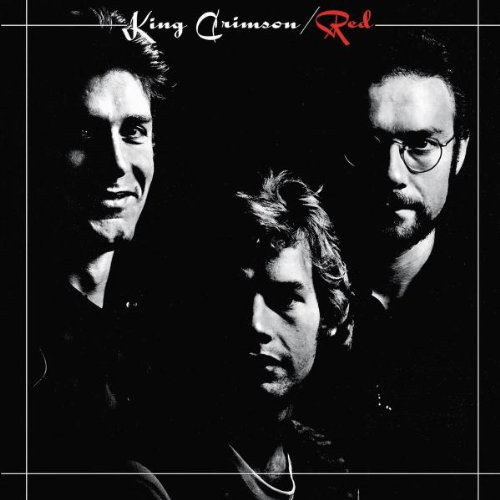
#43: King Crimson - Red

Release Year: 1974

King Crimson in the 70s was an interesting band.  Each album was stylistically completely different, and the lineup was a revolving door for musicians (only Robert Fripp was in the band throughout that whole era).  Red was their last album recorded before Fripp finally declared King Crimson to be "completely over for ever and ever," and it was actually released after they broke up.

This album is notable for being the only heavy Crimson album, and the only album they recorded as a trio.  Without any flutes, violins, saxophones, or other more classical instruments remaining, King Crimson took on a sound far more akin to the typical 1970s rock band.

Red still has many of the progressive elements that made earlier Crimson albums so interesting–the last two tracks in particular feature some improvisation–but I find it far more accessible than anything else they've done.  While it's not the most brilliant work they've done, it's a one-of-a-kind album in the King Crimson world, and probably the one I'd recommend for people who want to ease into the King Crimson way of doing things.

Standout tracks:
  • Fallen Angel
  • One More Red Nightmare 

Thursday, September 8, 2011

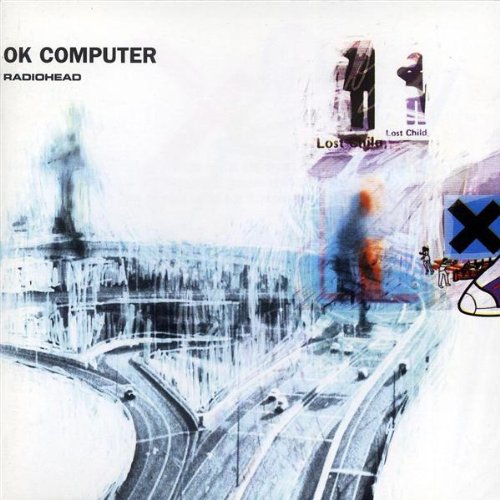
#45: Radiohead - OK Computer

Release Year: 1997

I didn't really start getting into Radiohead until Kid A came out in 2000, but I was a fan of the two Radiohead songs I heard on the radio: "High and Dry" and "Karma Police" (I never much cared for "Creep").  The former was from their straightforward rock album The Bends, and the latter is found on OK Computer.

When I finally decided to further investigate this Radiohead band, I started with Kid A, since it was their new album at the time, and then worked back.  If I enjoyed Kid A, I was blown away by OK Computer.  This was an album that had some of the straightforward rock elements of its predecessor, but it had a killer atmosphere.  They took it to a level where they weren't just assembling a few random songs they had written, without any thought as to how they fit together.  For the first time, they wrote an album, which had a distinct aura and thematic elements, and where each piece became a necessary component of a single coherent unit.

I get tired of all the bleeps and bloops on their post-Kid A work, but I never get sick of this album.  There's really not a bad cut here (except for "Fitter Happier," of course).

Standout tracks:
  • Paranoid Android
  • Exit Music (For A Film)
  • Karma Police
  • Climbing Up The Walls 

Tuesday, September 6, 2011

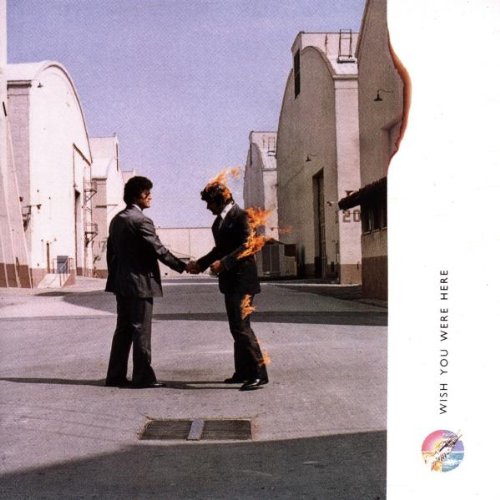
#47: Pink Floyd - Wish You Were Here

Release Year: 1975

Pink Floyd had a pretty awesome run there in the 70s, with Meddle (1971), Dark Side of the Moon (1973), Wish You Were Here (1975), Animals (1977), and The Wall (1979).  Dark Side and The Wall are easily the two most well-known, but to me, their best album is Wish You Were Here.

This album borrows a format that has become a mainstay in progressive bands throughout the decades, where they sandwich a few standard-length songs in between two extended, and usually related, song suites (the earliest similarly structured album I can think of off the top of my head, without doing any serious effort, is King Crimson's 1973 album Larks' Tongues in Aspic).  Here, it is the excellent "Shine On, You Crazy Diamond."

But it's not "Shine On" that makes this album a winner... In fact, it's rarely those extended bookends that make these albums work... It's actually the three middle tracks.  I cannot think of a more diverse and enjoyable mix of songs than "Welcome to the Machine," "Have A Cigar," and "Wish You Were Here."  "Machine" has an aura that no other Pink Floyd song achieves, "Cigar" features one of The Floyd's greatest grooves and guitar solos, and the title track is brilliant in its simplicity.

I've been listening to Pink Floyd since I was in high school.  Twelve years after I first heard Dark Side, this is the Pink Floyd album I like the most (and writing this review is really making me wish I had placed it higher than #47).

Standout tracks:
  • Welcome to the Machine
  • Have A Cigar
  • Wish You Were Here
  • Shine On, You Crazy Diamond
  • (yes, that's the whole album) 

Monday, June 20, 2011

Telluride Bluegrass Festival 2011

Well, it's over.  Got back an hour and a half ago from my new favorite yearly event, the Telluride Bluegrass Festival.  In case you haven't been to this particular festival, or heard much about it, it is hardly bluegrass music at all, in the traditional Bill Monroe way.  For the most part, it is more bluegrass-y music, in various styles and genres.  To my knowledge, none of the following 2011 TBF artists have ever played anything resembling bluegrass:
  • The Head and The Heart (indie folk)
  • Sarah McLachlan (folk/rock)
  • Joe Pug (folk)
  • Bela Fleck and the Flecktones (jazz)
  • The Decemberists (indie folk/rock)
  • Darrell Scott (country-folk)
  • Abigail Washburn (folk?)
  • Mumford & Sons (folk rock)
  • Robert Plant (folk rock)
That's probably like half the lineup.  And most of the remaining artists either have only played limited amounts of bluegrass but are known for other things (Emmylou Harris, Steve Earle, Edgar Meyer) or play progressive bluegrass.  So there you have it... A bluegrass festival that would offend bluegrass traditionalists.

Wednesday
I drove up early Wednesday, played a round of golf, and got settled into my condo, after which I turned my attention to the festival.

The festival officially started with a free show in Mountain Village on Wednesday, opened by Sarah Jarosz, and Cornmeal following.  I didn't watch Sarah (I have respect for her talent, especially at such a young age, but don't care for her music), but Cornmeal didn't disappoint.  After Cornmeal was the 10th annual kickoff party with Yonder Mountain String Band, which I attended.  In typical Yonder fashion, it featured a few bluegrass songs, a few of their bluegrassy-but-not-bluegrass tunes, some very extended jams (which is why we watch this band)... and an audience hot boxing an indoor conference center where I highly doubt smoking of any kind is allowed.

Thursday 
Thursday started off slow.  Tim O'Brien and Kevin Burke opened.  I listened, but one can only take so much of two fiddles playing Irish music.  The Head and The Heart followed... I like their record, but their show was basically just hearing their record played on stage.  I know they're young, so they have time to work on building more of a stage presence.

Cornmeal, again, did not disappoint.  This band is somewhat mysterious; it's hard to even find someone who could name a single Cornmeal studio album.  There has to be one, right?

I skipped Michael Cleveland and Flamekeeper to take a short hike up Bear Creek behind the stage.  Very scenic, though a little exhausting at that elevation.

Bear Creek Falls
 I returned for Steve Earle's set, which I enjoyed.  We skipped Sarah McLachlan in favor of dinner in Telluride, and returned for the House Band.

The highlight of the day turned out to be the following event: the Trampled by Turtles nightgrass show at the high school auditorium (aka "Palm Theater").  I knew this band would be intense, but I still left amazed at the raw energy this band has (interestingly, the program blurb about TbT alleges that they used to play all their shows sitting down).

Friday
I was expecting Friday to be superb.  The lineup was solid on paper, and there was at least one new band I was interested in checking out (Stringdusters).  It started with Joe Pug, who is very talented to be sure, but gets a little dull after a few songs.  Chris Thile and Michael Daves then took the stage, and amazed everybody with their technical chops.  I have no clue who Michael Daves is, but that man is an amazing guitar player.

By the time The Infamous Stringdusters took the stage, it had begun drizzling.  Their music was OK (the only things I remember are the only songs I recognized: Danny Barnes' "Get It While You Can" and U2's "In God's Country."  Because of the rain, I ditched out to have lunch with the gang.

We all returned to watch Jerry Douglas' trio perform, which was pretty good.  I left early to hit up Elks Park, where the Punch Brothers were supposed to perform.  Unfortunately, the Troubadour contest ran late, so I was only able to hear two Punch Brothers songs before I had to make my way back for Trampled.

And again, Trampled by Turtles won the day: 

Emmylou Harris followed, and then Bela Fleck and the Flecktones.  A few of us left Flecktones early to return the condo.  I took care of some business, and then returned for Railroad Earth.  Unfortunately, my back wasn't feeling it, so I left Railroad Earth halfway through.

Saturday
On Saturday morning, there was the second ever public screening of a new documentary about Punch Brothers entitled "How To Grow A Band."  Since it was free, and because I love Punch Brothers, I decided to attend (even though it meant missing out on Nora Jane Struthers or Sara Watkins with Chris Thile (who schedules a movie that is basically about Chris Thile at the same time as a Watkins/Thile performance? seriously?)).  I watched the movie with my buddies Myke and Futureman (just kidding, I didn't watch the movie with Futureman, although he was in the 186-seat theater).  The movie began with Thile's history (notably with Nickel Creek), and then focused on the creation and evolution of his current band, Punch Brothers.  It used his 40-minute, four movement suite about his divorce as the backdrop; the movie itself was divided up into four "movements," each of which features music from the corresponding movement of the song; and significant attention is given to how the piece is presented, and how that all fits into what the band is trying to accomplish.

After the movie, I visited Elks Park (it being a block away from the theater), and noticed that "Bela & Friends" were next.  In what is very likely the most unfortunate decision in his life so far, Myke decided to head back to the main stage, whereas I decided to check out the set.  The set went like this: a banjo duet with Noam Pickelny (of Punch Brothers fame); a duet with Casey Driesson (fiddlist); a banjo duet with his wife Abigail Washburn; an improvised quintet with Victor Wooten, Futureman, Chris Thile, and Driesson (more on this); a bluegrassy sextet with the former group plus Pickelny; a sextet with the former group, sans Pickelny and with Washburn; and a song with everybody.  The highlight was the quintet, which was basically an improvised jazz number (Bela gave the other musicians directions before the song), which had an incredible duel between Victor and Bela.  I really hope this shows up on Youtube.

I then headed back to the main stage, and caught Tim O'Brien's set.  After that, Yonder put on a very solid show.

And then...The Decemberists.  This show had what was easily the most memorable moment of the festival.  Throughout the show, Colin Meloy frequently referenced a pick-off challenge he made in 2005 to Bela Fleck and Jerry Douglass, and claimed victory by forfeit.  During the last song of the main set, The Decemberists went into a jam, and Meloy once again referenced the pick-off.  Bela appeared on stage, and...well, I'll let you watch the rest:


Afterwards, Sam Bush took the stage, and was excellent as usual.

Needless to say, The Decemberists win the day.

Sunday
Sunday began with the Darrell Scott & Friends Father's Day Gospel Hour.  I like Darrell Scott, and this set was actually quite inspirational.  I think I was actually more inspired by it than I would have been at church.  Edgar Meyer followed...he was very respectable, but it was a little bit like listening to classical music.  Which isn't a good idea when you tired.  Chris Thile did join him at the end, which was quite enjoyable.

Next up was Abigail Washburn.  I have to say, I was very impressed with her set.  She gets the "Surprise Performance of the Weekend" award.

It had been a few years since I had seen Bridal Veil Falls, so I took a short jaunt up the road after Abigail's set.  I returned about halfway through Pete Rowan's set, which was hard to focus on due to the very ominous-looking clouds to the west.  And ominous was probably an appropriate way for them to come across, as they started leaking on us a little before Punch Brothers took the stage.

I like to think there are few things better than when one of your favorite artists covers another one of your favorite artists.  That's what Punch Brothers did when they played Josh Ritter's "Another New World."  Also, they did Beck's "Sexx Laws," which was also cool, in its own little way.  They say Punch Brothers are unpredictable...

Mumford & Sons followed Punch Brothers.  They put on a good show, and played several new tunes, but alas, I still left a little underwhelmed... but that's only because it's really hard to top what they did last year. After M&S, the rain finally stopped, and a clearing sky and setting sun revealed fresh snow only about 1,000 feet above Telluride.  I have to say, the only reason I was able to endure that freezing cold rain, and even effectively ignore it, was because Punch Brothers and Mumford & Sons were the two bands playing right then.

The rest of the gang left after M&S, leaving me to enjoy Robert Plant by myself.  And that I did.  He played several of the tracks from his album Band of Joy, gave the spotlight to band members Darrell Scott, Patty Griffin, and Buddy Miller to sing a song each (Darrell did "Satisfied Mind," one of the highlights of the set), and played several Led Zeppelin songs (Ramble On, What Is And What Should Never Be, Gallows Pole, Black Dog, Misty Mountain Hop, Black Country Woman (whose lyrics he admitted are "not exactly Shakespeare"), Houses of the Holy).  I left around eleven, so he could've even done more after I left (as long as he didn't do Stairway, I'm OK missing it).  

Robert Plant wins Sunday.

Monday
Woke up Monday to... snow?  Yes, it was white all over, and snow was still falling from the sky.  Unbelievable.  After loading up my car, I headed down to Telluride for one last walk through town (and two last Baked In Telluride doughnuts).  The streets were dead, and most of the people out and about appeared to be locals.  This scene captured the "festival is over" feeling of the morning: 
Disassembling the Elks Park stage
 It was a great trip.  The music was superior to last year, and I think I'll have more memories come out of it.  Plus, I got to share it with some friends this time.

T minus 366 days till Telluride 2012! 

Addendum:
I had a couple of philosophical thoughts about the festival since posting this:
  • If you want to know how steeped in tradition this crowd is... Or, in other words, whether this is really a "bluegrass" crowd... Consider that a lot of people in the crowd knew the lyrics to "Sexx Laws."
  • I think the thing that sets TBF apart from other popular festivals, in my mind, is the location.  I love the San Juan Mountains.  I don't love Indio, CA.  TBF is in a village of a couple thousand people, which gets completely overwhelmed by the 10,000+ people who are there for the festival.  You can walk across town in 15 minutes.  You can leave your festival chair, go on a scenic four hour hike, and sit down again, without having to get in your car and drive somewhere.  It's not about the music; it's about how the music interacts with the surrounding environs. 

Friday, December 3, 2010

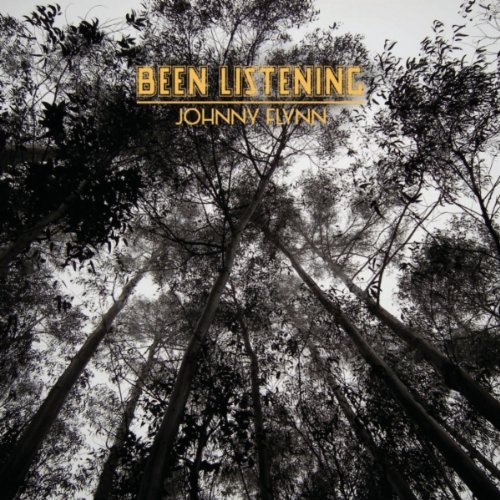
Johnny Flynn & The Sussex Wit - Been Listening

Release Date (UK): June 7, 2010
Release Date (US): October 25, 2010
Label: Transgressive Records


This is one I've been wanting to review for awhile. I've had it since it was released in the US, about five weeks ago. The reason I hadn't gotten to it yet is that I wanted to give it a few listens before forming an opinion on it.

Since I already reviewed their previous album, I'll spare the background information and get right to this album.

Obviously, since I liked A Larum so much, I had been looking forward to this for awhile.  I listened to it right when I got it, and as it turns out...it didn't really grab me.  I couldn't say then and there that this is a solid album, and that you should go out and buy it.

 The album starts off well.  The first track, Kentucky Pill, is a thoughtful, mature folk tune, with a great sound.  Lost and Found is another thoughtful, mature folk tune, with a great tune.  Churlish May, like the first two tunes, has a moderate tempo, but some horns are added to the mix.

Right away, I noticed that this album features a more mature, well-developed sound than its predecessor (which I just pronounced "PREE de sess or" in my head, due to Johnny's English accent).  The songs are very tight, flow very well, and seem to reflect a more poetic and mellowed out Flynn.

The title track is a slow, peaceful folk ballad featuring a very slightly overdriven lead guitar, and vocals that seem to want to be reduced to only a whisper.  It is slow and plodding, but does not drag the way the only plodding song on their previous album, Brown Trout Blues, does.  Flynn has figured out how to write a good slow song.

Barnacled Warship, one of the highlights of the album for me, starts out with what sounds to my untrained ears like a cello (or maybe it's the bottom of a violin's range...who knows), and teases us with some of the awesome harmonies which made A Larum so great, and had more or less eluded us up to this point.  This is a good medium-paced song, but by now it feels someone lively.

Sweet William (Part 2) is another good track.  Livelier yet than the previous track, The Sussex Wit treat us to a cool banjo part, with some strings and horns in the mix.

At this point, they slow it down again, and we get a slow duet with Flynn and fellow London folk musician Laura Marling, called The Water.  Musically, this one is a little drab, albeit beautiful.  It's definitely new territory for Johnny Flynn & The Sussex Wit.

Howl is a slightly bluesy piece with a bit of angst in the chorus.  I'm torn on this one; in some ways, this is to this album what Brown Trout Blues was on the last, although this is a significantly better song, and a more dynamic one than we're used to from this band.  I think it may have worked better had it followed a more lively song.

The next track, Agnes, is lively, but unlike the lively tracks from the previous album, this actually sounds like a happy song.  While there is nothing wrong with optimistic lyrics, I do kind of miss the juxtaposition of dark lyrics with upbeat music.  Happy lyrics with upbeat music just isn't as cool.

Amazon Love is the slowest song on the whole album, with just a piano carrying most of the instrumental load.  It's an incredibly mellow track; possibly the most mellow on either album.  The Prizefighter And The Heiress also starts out relatively slow, but picks up halfway through, finishing the album on a strong note.

Tracklist:
1Kentucky Pill3:52
2Lost and Found3:41
3Churlish May4:02
4Been Listening5:16
5Barnacled Warship5:12
6Sweet William, Pt. 25:00
7The Water4:12
8Howl4:44
9Agnes3:40
10Amazon Love5:39
11The Prizefighter and the Heiress5:06

It should be said that every track here is good.  This album's flaw is not in what it contains, but rather, what it is missing.  Gone is the lighthearted attitude that A Larum seemed to carry.  This is a serious album, rather than a fun one.  The strength of their first album lay in its being a toe-tappingly fun folk record, and this is (with the possible exception of the first track) almost entirely devoid of that element.  This at once leaves me a little disappointed, as I didn't get what I expected to get out of it, but also fairly confident that Johnny Flynn & The Sussex Wit are more than capable of growing musically, rather than releasing album after album of the same material.

Addendum: The US version comes with the Sweet William EP appended to the end of the album, consisting of these tracks:
  1. The Mountain Is Burning
  2. Trains
  3. Sweet William
  4. Drum
I'm not going to review them here; suffice it to say, they lean toward the mellow side.


★★★☆