I've been listening to a lot of 70s music lately. What a great decade, when many timeless musicians wrote their most timeless music. Anyways, I have all kinds of 70s records sitting on my shelf that I haven't listened to more than once or twice... And I didn't grow up in the 70s, so there are obviously all kinds of musicians from that time that I haven't even heard. So I'm not going to have any pretense that these are the 75 best songs from the 70s; they're just 75 great songs, roughly sorted in order of how much I like them.
75. Neil Young - Hold Back The Tears
American Stars 'N' Bars - 1977
American Stars 'N' Bars kicked off a sort-of country/folk era for Neil Young. This album is one of the least awesome in the strongest stretched of albums produced by any artist, but it's still solid. This is probably my favorite track from the album, though "Like A Hurricane" is probably the most well-known.
74. Gentle Giant - Mobile
Free Hand - 1975
Gentle Giant weren't quite as successful as other such prog acts as Yes, King Crimson, ELP, etc., but they certainly didn't lack in originality. I don't know what to say about "Mobile," other than it's an excellent prog track.
73. King Crimson - Ladies of the Road
Islands - 1971
"Ladies of the Road" is interesting for both its funky bass line, and the accusations of misogyny that resulted from this track. It is most definitely naughty. Ranks high in both humor and crudeness.
72. Crosby, Stills, Nash, & Young - Helpless
Deja Vu - 1970
Truth be told, I like this one better when Neil does it solo, but I'll reference the CSNY version, anyways. Nice, mellow, melodic pop song.
71. Elton John - I've Seen That Movie Too
Goodbye Yellow Brick Road - 1973
I may be criticized for choosing this over more popular songs from the same album, "Bennie and the Jets," and "Saturday Night's Alright For Fighting." But this one simply has a better melody, and a nice feel.
70. Yes - Turn of the Century
Going For The One - 1977
I really like the sound of this one... Little, if any, percussion; just atmosphere. It actually builds up nicely, despite its relative sparseness.
69. Gentle Giant - On Reflection
Free Hand - 1975
This song is a clinic on vocal harmony. It sounds like there are at least 30 vocal parts playing off of each other. Also, the band member switch instruments during the song, even when playing live. Cool.
68. Jackson Browne - Under The Falling Sky
Jackson Browne - 1972
An excellent track from Browne's debut album, "Under The Falling Sky" really works because of its interesting traditional/minimalist percussion.
67. Yes - Release, Release
Tormato - 1978
Tormato was not well-received in the Yes community due to the perception that they were shunning prog in order to write pop music. But it's hard for me to denounce this album, because it has some great music, even if they are slightly poppy. "Release, Release" is certainly better than that completely unlistenable "Owner of a Lonely Heart" that somehow became their biggest hit in the 80s.
66. Crazy Horse - Dance, Dance, Dance
Crazy Horse - 1971
Crazy Horse has actually been Neil Young's backing band on many an occasion, but they did release an album or two on their own. I believe "Dance, Dance, Dance" was actually penned by Neil, but it sounds great here.
65. Neil Young - Campaigner
Decade - 1979; Chrome Dreams - 1975 (unreleased)
"Campaigner" is the best Neil Young song never to make it onto a Neil Young studio album, besides maybe "Ohio." I like the feel of this song, from the acoustic guitar, to the vocal dynamics.
64. The Rolling Stones - Far Away Eyes
Some Girls - 1978
I like the Rolling Stones when they get weird, and this is a weird song. It features a spoken word verse with Mick Jagger talking like a country bumpkin, which makes the chorus that much more catchy.
63. Led Zeppelin - The Battle of Evermore
Led Zeppelin IV - 1971
At some point in time, John Paul Jones fell in love with the mandolin, and this was one of the first songs to really showcase the instrument. Pair a few mandolins up with a renaissance-sounding vocal melody, and you get one of the more interesting songs Zeppelin conjured up.
62. Billy Joel - You're My Home
Piano Man - 1973
This is one of those songs that doesn't really stick out when you're listening to the record, but when you hear it in a mix, it shines. I think it largely has to do with the guitar sound.
61. Crosby, Stills, Nash, & Young - Ohio
Decade - 1979; So Far - 1974
"Ohio" was one of the most well-known protest songs in the 70s, but it never appeared on a record until CSNY's So Far collection. Penned in response to the Kent State shootings, Ohio sometimes resurfaces when the issue of police violence enters into the public consciousness.
60. Creedence Clearwater Revival - Travelin' Band
Cosmo's Factory - 1970
John Fogerty was never accused of making his songs too complex, and this song is a perfect example of how great a really simple song can be. It almost sounds like a late 50s rockabilly tune, except with Fogerty's distinctive vocal style.
59. The Rolling Stones - Doo Doo Doo Doo Doo (Heartbreaker)
Goats Head Soup - 1973
This track is the perfect marriage of the British Invasion sound better characterized by early Stones work, and the 70s rock they were fully immersed in by Beggar's Banquet or Exile.
58. Led Zeppelin - Tangerine
III - 1970
Led Zeppelin's III has some great work, but this song best epitomizes Zep's folky side, which is my favorite side of Led Zeppelin.
57. Yes - Clap
The Yes Album - 1971
Possibly an unconventional choice, since it's really just a guitar solo, but it is one of my favorite guitar solos. I'd consider my guitar playing ability sufficient if I could just learn this song.
56. Lynyrd Skynyrd - Sweet Home Alabama
Second Helping - 1974
Who doesn't like this song? It has one of the most popular guitar riffs ever. The history of this song makes it even better; it was written in response to one or two Neil Young songs about racism in the South (hence the reference to Neil Young in one of the verses), one of which is
55. Neil Young - Southern Man
After The Gold Rush - 1971
Neil Young is great when he stirs up controversy, and this one made quite the dig at the South. Besides its being a scathing critique of racism in the South, it is just a great song.
54. King Crimson - Cat Food
In The Wake Of Poseidon - 1970
Poseidon was one of Crimson's weaker albums in the 70s, but it still produced some gems... One of which is the weird little track "Cat Food." This one may need to be heard in surround sound, due to its many instrumental and vocal tracks.
53. King Crimson - Fallen Angel
Red - 1974
By the time Red came around, King Crimson was a trio, creating a much different feel than classical- and jazz-influenced work from Poseidon, Lizard, and Islands. "Fallen Angel" has a nice melody and great dynamics, and is possibly the song that best utilizes the trio format.
52. Billy Joel - Why Judy Why
Cold Spring Harbor - 1971
Cold Spring Harbor, Joel's debut record, never achieved the fame his later records did, but it is, in my opinion, one of his best. "Why Judy Why" was one of his first great ballads, and served as a great starting point for one of the best songwriters of the 70s.
51. Kris Kristofferson - Don't Cuss The Fiddle
Waylon & Willie - 1978
This song was recorded by Waylon Jennings and Willie Nelson, but it was written by Kristofferson, generally considered one of the best country songwriters ever. I'm not hugely familiar with Kristofferson's work, but this is probably one of my top five country songs ever.
Showing posts with label neil young. Show all posts
Showing posts with label neil young. Show all posts
Wednesday, February 1, 2012

Sunday, November 6, 2011
#1: Neil Young - Tonight's The Night
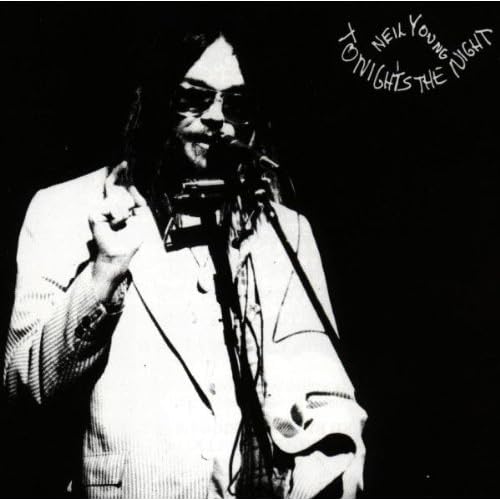
If you were to compile a list of the top 10 Neil Young songs, would any of them be found on Tonight's The Night? Doubtful. Why, then, is it my favorite album ever? I think it is actually partly because of that.
When Neil made this record, he was hot off his most successful record ever, Harvest. He was at the height of popularity, but he was completely depressed. He had lost two close friends to substance abuse, and he was dealing with substance abuse problems of his own. This album captures that mood better than perhaps any other album ever made. It is a clinic on tone.
As a display of incredible songwriting and musical talent, this album is not Neil's best. There are certainly some excellent tracks, but it is so raw that Neil doesn't even bother to clean up his voice cracking or his completely missing notes. But as a work of art, it is transcendent.
Standout tracks:
- Lookout Joe
- New Mama
- Come On Baby Let's Go Downtown
Monday, October 31, 2011
#5: Neil Young - On The Beach
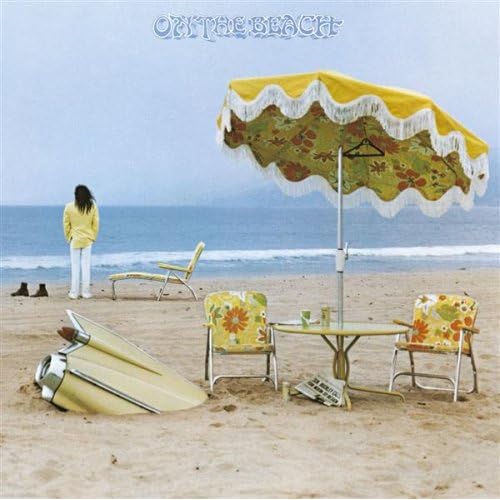
The first time I heard On The Beach, I thought the first half was brilliant. "Walk On" is a great rock song, "For The Turnstiles" is a nice little banjo tune, and "Revolution Blues" is like an even better "Southern Man."
But this album really achieved greatness for me when I heard it while driving down the freeway in Phoenix late one night, while in a mellow state of mind, and "Motion Pictures (For Carrie)" came on. A feeling of peaceful satisfaction came over me that lasted through the end of "Ambulance Blues."
The back side of this album was recorded while the band were consuming a marijuana-laced honey concoction, and the result is three mellow tracks with an abstract and tender quality not achieved anywhere else in his repertoire.
This record is a portrait of a man on his way out of the ditch. This is an album about finding resolution in your toughest battles.
Standout tracks:
- Revolution Blues
- Ambulance Blues
- Walk On
Monday, October 24, 2011
#11: Neil Young - Everybody Knows This Is Nowhere

Neil Young's second album, and first with Crazy Horse, is a true masterpiece. Crazy Horse was one of the loudest bands of the time, and provided a perfect vehicle for Neil's songwriting ability.
It's really difficult to beat an album with both "Down By The River" and "Cowgirl In The Sand," two of the best rock songs written by anybody, ever. Neil has written several lengthy rock songs ("Words," "Last Dance," "Cortez the Killer," "Like A Hurricane," "Shots," at least four songs from Ragged Glory, "Change Your Mind," "Scenery," "Ordinary People," and "No Hidden Path," just to name a few), but the two on this album are his very best.
This is the album that turned me into a Neil Young fan. The first Neil records I had heard were Harvest, Harvest Moon, and After the Gold Rush, two of which are Young's most successful albums, but it is this one that converted me.
Sunday, September 25, 2011
#30: Neil Young - Time Fades Away

In 1973, Neil Young was hot off his hit record, Harvest, which is probably his most successful album ever. While touring in support of that album, he was trying to play the songs he wanted to play, with a band he was not comfortable with, to audiences who just wanted to hear Harvest. The result is Neil Young's live album Time Fades Away, which is, to this day, (officially) only available on vinyl. Neil hated the tour, and the shows where these songs were recorded, but released it "so you could see what could happen if you lose it for awhile."
What happened is a great collection of songs. There are a few classic Neil Young guitar rock songs, reminiscent of Crazy Horse. There are three piano ballads ("Journey Through The Past," "Love In Mind," and "The Bridge") which make this album really work. And it closes with a longer, upbeat track more in the vein of "Cowgirl" called "Last Dance."
There are all kinds of great Neil Young records to choose from, but this is one that stands out for its rawness, its history, and, also somewhat importantly, its music.
Standout tracks:
- Last Dance
- Journey Through The Past
- Don't Be Denied
Tuesday, September 13, 2011
#40: Neil Young - Freedom
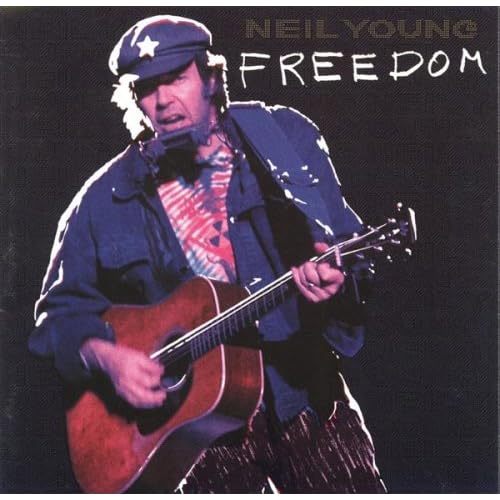
Neil Young has had a very long career, beginning in earnest in the 60s, and continuing today. I consider Young to be the best songwriter alive, a title that many believe belongs to Mr. Dylan. His most well-known, and indeed strongest, body of work was from 1969-1979, beginning with Everybody Knows This Is Nowhere and ending with Rust Never Sleeps. Every album in this period is spectacular. 1979's Rust featured an acoustic front side and electric back side, with different versions of "Hey, Hey, My, My" on each side.
The 80s were a very turbulent period, music-wise, for Young. He started with a seemingly patriotic folk album, then went with a new wave rock/punk album, followed that up with an album where most of the vocals were computerized, then released a rockabilly album, followed by a country album... That only takes us to mid-decade, but you get the picture. The upshot is that his popularity eroded by 1987, and Life became his least successful album ever. But then, out of nowhere, emerged Freedom. This is the album that kicked off the grunge movement, and brought loud, angry rock music to the forefront of the music world. "Rockin' in the Free World" became his biggest hit in probably a decade.
Neil borrowed the Rust bookend concept with this one: the album begins with an acoustic version of "Rockin' in the Free World," and closes with the more well-known electric version of the same song. Though this album is known for its angry protest song, it is actually more toned down and folksy than its successor, Ragged Glory. There is quite a variety of styles here, with several folk tunes, and only a few rockers.
Freedom is Neil's most solid album after 1975, and, despite being released in 1989, one of the most important of the 90s.
Standout tracks:
- Rockin' in the Free World
- Crime In The City (Sixty To Zero Part I)
- Eldorado
- Too Far Gone
Wednesday, March 16, 2011
Neil Young & Crazy Horse - Zuma
Release Date - November 10, 1975
Label: Reprise Records
I know I've already hit two of Neil Young's 1970s albums, but I just listened to this again, and figured I might as well finish up Neil's best trio of records.
I've already covered the last two albums of the Ditch Trilogy - On The Beach and Tonight's The Night. Tonight's The Night was recorded earlier (but was held up for two years by the record label), and was made in the wake of what Neil described as his most nightmarish tour, the death of two close friends, and his own addiction problems. On The Beach paints the picture of a man recovering, with cynical themes, but without the air of utter despair. If the ditch trilogy is the window into the soul of a man who was at rock bottom, Zuma is the product of a man who had rediscovered hope.
 For the first time since Everybody Knows This Is Nowhere, Crazy Horse was given partial credit for the album. Crazy Horse existed independently of Neil Young before Nowhere, and while they did (in various combinations) assist Young during subsequent tours and recording sessions, they also released two or three albums of their own. Crazy Horse was more than just Neil Young's backup band, and if you listen to Nowhere and Zuma, and compare them to all of Neil's albums in between, it becomes obvious how profound an influence they have.
When you listen to Zuma, you can tell that Young was in a completely different state of mind than he had been the few years prior. Gone are the loose, drug-influenced jams found on the back side of On The Beach, and gone are the painfully raw vocal strains and desperation found on Tonight's The Night. Zuma is a very tight record; it is straightforward, melodic rock music from start to finish. The Neil Young who was passionate about delivering a well made, enjoyable rock song has returned. While there aren't any cuts that achieve quite the epic greatness of "Down By The River" or "Cowgirl in the Sand" (though "Cortez the Killer" comes close), Zuma has to be strongly considered for the title of Neil Young's Best Rock Record.
Zuma starts out with a revisiting of a song Neil wrote while in high school called "I Wonder." Here it's called "Don't Cry No Tears," and while it has the same melody, it manages to be decidedly 1970s instead of 1960. We're then treated with a classic Neil Young guitar rock song, "Danger Bird." "Pardon My Heart" is a nice little acoustic guitar-based love song. The best track on this album, "Cortez The Killer," features some of Neil's most famous guitar work, a classic epic in the vein of "Down By The River." "Cortez" fades out at the end because the band actually ran out of tape while recording (the song clocks in at seven and a half minutes). The final track, "Through My Sails," is actually a Crosby, Stills, Nash, & Young track cut from a recording session whence an album never materialized.
Zuma has always been one of my favorite Neil Young albums, and along with Nowhere, it firmly placed Young (along with Crazy Horse) into the echelons of the rock greats.
Track list:
Note: For the rest of March, Zuma is one of Amazon's $5 mp3 downloads. Jump on it while you can (granted, you can pick up the CD for not much more than that).
★★★★
Label: Reprise Records
I know I've already hit two of Neil Young's 1970s albums, but I just listened to this again, and figured I might as well finish up Neil's best trio of records.
I've already covered the last two albums of the Ditch Trilogy - On The Beach and Tonight's The Night. Tonight's The Night was recorded earlier (but was held up for two years by the record label), and was made in the wake of what Neil described as his most nightmarish tour, the death of two close friends, and his own addiction problems. On The Beach paints the picture of a man recovering, with cynical themes, but without the air of utter despair. If the ditch trilogy is the window into the soul of a man who was at rock bottom, Zuma is the product of a man who had rediscovered hope.
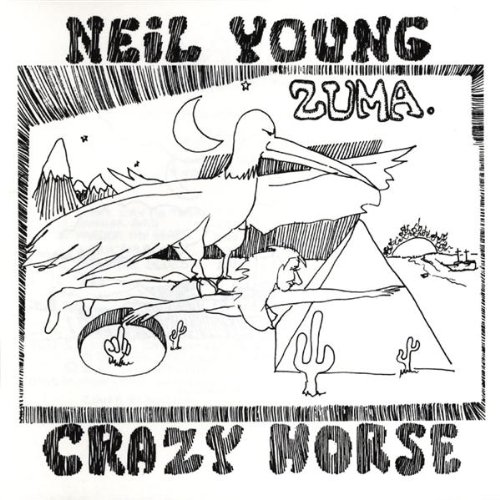
When you listen to Zuma, you can tell that Young was in a completely different state of mind than he had been the few years prior. Gone are the loose, drug-influenced jams found on the back side of On The Beach, and gone are the painfully raw vocal strains and desperation found on Tonight's The Night. Zuma is a very tight record; it is straightforward, melodic rock music from start to finish. The Neil Young who was passionate about delivering a well made, enjoyable rock song has returned. While there aren't any cuts that achieve quite the epic greatness of "Down By The River" or "Cowgirl in the Sand" (though "Cortez the Killer" comes close), Zuma has to be strongly considered for the title of Neil Young's Best Rock Record.
Zuma starts out with a revisiting of a song Neil wrote while in high school called "I Wonder." Here it's called "Don't Cry No Tears," and while it has the same melody, it manages to be decidedly 1970s instead of 1960. We're then treated with a classic Neil Young guitar rock song, "Danger Bird." "Pardon My Heart" is a nice little acoustic guitar-based love song. The best track on this album, "Cortez The Killer," features some of Neil's most famous guitar work, a classic epic in the vein of "Down By The River." "Cortez" fades out at the end because the band actually ran out of tape while recording (the song clocks in at seven and a half minutes). The final track, "Through My Sails," is actually a Crosby, Stills, Nash, & Young track cut from a recording session whence an album never materialized.
Zuma has always been one of my favorite Neil Young albums, and along with Nowhere, it firmly placed Young (along with Crazy Horse) into the echelons of the rock greats.
Track list:
| 1 | Don't Cry No Tears | 2:34 |
| 2 | Danger Bird | 6:54 |
| 3 | Pardon My Heart | 3:49 |
| 4 | Lookin' for a Love | 3:17 |
| 5 | Barstool Blues | 3:02 |
| 6 | Stupid Girl | 3:13 |
| 7 | Drive Back | 3:32 |
| 8 | Cortez the Killer | 7:29 |
| 9 | Through My Sails | 2:41 |
Note: For the rest of March, Zuma is one of Amazon's $5 mp3 downloads. Jump on it while you can (granted, you can pick up the CD for not much more than that).
★★★★
Monday, February 7, 2011
Neil Young - Tonight's The Night
Release Date: June 20, 1975
Label: Reprise
 Despite occupying a high position on many "best albums of all time" lists, Neil Young's Tonight The Night is new to me. I am a huge Neil fan, but I've just been occupied with his other work... I've been trying to absorb On The Beach, Ragged Glory, the Archives, the first two Buffalo Springfield albums... But I saw this for a reasonable price at the record store, and decided to finally pick it up.
I mentioned this album in my previous review. It is the second recorded album in the Ditch Trilogy, but was not released until well after On The Beach due to the record company's reluctance. Why were they reluctant, you ask? I think it might have something to do with the fact that this might be the most honest and raw album ever recorded. It is completely understandable that they wouldn't want this to be Neil's follow-up to the wildly successful Harvest.
Tonight's The Night was written shortly after two of Neil's close associates, Bruce Berry and Danny Whitten, died of heroin related causes. It also came on the heals of a tour which Neil considered the most disastrous of his career, during which Time Fades Away was recorded. The result is a record that is pure depression, pure cynicism. This is a window into the soul of a man who was at rock bottom, and it has never been more vividly captured on tape than here. Take the lyrics to the rambling "Tired Eyes:"
Some people complain about how raw the music is. They criticize the poor singing in songs like "Mellow My Mind," where Neil sings off key, with a cracking voice. They complain about his borrowing a tune from the Rolling Stones, in the song "Borrowed Tune." I say, that's the point. He's telling us that he's so wasted that he can't even write his own song:
★★★★
Label: Reprise
I mentioned this album in my previous review. It is the second recorded album in the Ditch Trilogy, but was not released until well after On The Beach due to the record company's reluctance. Why were they reluctant, you ask? I think it might have something to do with the fact that this might be the most honest and raw album ever recorded. It is completely understandable that they wouldn't want this to be Neil's follow-up to the wildly successful Harvest.
Tonight's The Night was written shortly after two of Neil's close associates, Bruce Berry and Danny Whitten, died of heroin related causes. It also came on the heals of a tour which Neil considered the most disastrous of his career, during which Time Fades Away was recorded. The result is a record that is pure depression, pure cynicism. This is a window into the soul of a man who was at rock bottom, and it has never been more vividly captured on tape than here. Take the lyrics to the rambling "Tired Eyes:"
He tried to do his best, but he could not.There are tributes here for both men: the title tracks, which bookend the album, mention Bruce by name. The most lively track, "Come On Baby Let's Go Downtown," was an old Crazy Horse song written and sung by Danny Whitten.
Some people complain about how raw the music is. They criticize the poor singing in songs like "Mellow My Mind," where Neil sings off key, with a cracking voice. They complain about his borrowing a tune from the Rolling Stones, in the song "Borrowed Tune." I say, that's the point. He's telling us that he's so wasted that he can't even write his own song:
I'm singing this borrowed tune.Yes, some of the music here is bad. But the bad music on this album is what makes it so great. There is also great music here. Albuquerque is excellent. New Mama has always been a favorite of mine. This is just such a unique album, and all fans of rock music should have this in their collection.
I took from the Rolling Stones.
Alone in this empty room.
Too wasted to write my own.
★★★★
Tuesday, November 23, 2010
Neil Young - On The Beach
Release Date: July 16, 1974
Label: Reprise
Every once in awhile, you dig up an old album and think, "Why did I not hear this earlier?" This recently happened to me, so I decided to write about what is quickly becoming my favorite Neil Young album.
I first started listening to Neil Young as a Freshman in college, back in 2001. The first album of his that I picked up was Harvest, and within a relatively short period of time, my collection had Everybody Knows This Is Nowhere, After the Gold Rush, Zuma, and Harvest Moon. Each of these albums is completely different, which is what makes Young great. His music covers the entire spectrum, covering everything from rock to blues to country to folk. He has even dabbled in electronic music, and was highly influential in the "grunge" movement. Neil Young will surely go down as one of the greatest musicians of our time.
 After the success of Harvest in 1972, pressure mounted to write a successful follow-up, and during this time, Crazy Horse guitarist Danny Whitten died of a drug overdose after having been kicked out of the band. This led to a stretch of albums known as "The Ditch Trilogy." The first was a live album, Time Fades Away, which Neil considers a disaster, and remains the only Neil Young album not available on CD. The second album he recorded, Tonight's The Night, was Neil's most pessimistic album, and would not be released until after On The Beach.
On The Beach was unavailable on CD until 2003, which may be part of why I personally never heard it while "discovering" Neil Young. It was not commercially successful, but it is now widely considered to be one of Young's best albums.
It opens with a lively, straightforward rock song called Walk On. This gives way to a remake of a song he did earlier, called See The Sky About To Rain. The third song, Revolution Blues, is a classic Neil rocker, along the lines of Southern Man and Cowgirl In The Sand. The fourth track is a weird little piece, For The Turnstiles, featuring Neil's banjo. Rounding out the front side is Vampire Blues, a bluesy song about the blood sucking tendencies of the oil industry.
The back side is where it starts getting weird. Neil and co. recorded these tracks while under the influence of a homemade marijuana concoction, leading to a much mellower feel for all three tracks. Those tracks, On The Beach, Motion Pictures (For Carrie), and Ambulance Blues, all take on a looser, more free-form structure. They are not as immediately grabbing, but after several listens, they start to grow on you.
Tracklist:
This album is solid. And considering he followed it up with Tonight's The Night and Zuma, this has to be considered one of his best stretches. It seems Neil Young went through some of his hardest times in the mid 70s, but it led to some of his best work.
★★★★
Label: Reprise
Every once in awhile, you dig up an old album and think, "Why did I not hear this earlier?" This recently happened to me, so I decided to write about what is quickly becoming my favorite Neil Young album.
I first started listening to Neil Young as a Freshman in college, back in 2001. The first album of his that I picked up was Harvest, and within a relatively short period of time, my collection had Everybody Knows This Is Nowhere, After the Gold Rush, Zuma, and Harvest Moon. Each of these albums is completely different, which is what makes Young great. His music covers the entire spectrum, covering everything from rock to blues to country to folk. He has even dabbled in electronic music, and was highly influential in the "grunge" movement. Neil Young will surely go down as one of the greatest musicians of our time.
On The Beach was unavailable on CD until 2003, which may be part of why I personally never heard it while "discovering" Neil Young. It was not commercially successful, but it is now widely considered to be one of Young's best albums.
It opens with a lively, straightforward rock song called Walk On. This gives way to a remake of a song he did earlier, called See The Sky About To Rain. The third song, Revolution Blues, is a classic Neil rocker, along the lines of Southern Man and Cowgirl In The Sand. The fourth track is a weird little piece, For The Turnstiles, featuring Neil's banjo. Rounding out the front side is Vampire Blues, a bluesy song about the blood sucking tendencies of the oil industry.
The back side is where it starts getting weird. Neil and co. recorded these tracks while under the influence of a homemade marijuana concoction, leading to a much mellower feel for all three tracks. Those tracks, On The Beach, Motion Pictures (For Carrie), and Ambulance Blues, all take on a looser, more free-form structure. They are not as immediately grabbing, but after several listens, they start to grow on you.
Tracklist:
| 1 | Walk On | 2:41 |
| 2 | See the Sky | 5:02 |
| 3 | Revolution Blues | 4:03 |
| 4 | For the Turnstiles | 3:15 |
| 5 | Vampire Blues | 4:11 |
| 6 | On the Beach | 6:59 |
| 7 | Motion Pictures (For Carrie) | 4:23 |
| 8 | Ambulance Blues | 8:56 |
This album is solid. And considering he followed it up with Tonight's The Night and Zuma, this has to be considered one of his best stretches. It seems Neil Young went through some of his hardest times in the mid 70s, but it led to some of his best work.
★★★★
Subscribe to:
Posts (Atom)