Friday, September 30, 2011

#25: Pain of Salvation: BE

Release Year: 2004

In 2005, I was heavily into the progressive metal scene, and one of the bands that had a small, but devout, following was Pain of Salvation.   This was their most recent album at the time, so I decided to check it out... And I didn't like it.  I found it overindulgent, and lacking any real structure.

Two years later, I finally decided to check out some of their other work, and I liked it.  I went back to BE, and perhaps I was just in a different place, but I liked it.  It is still overindulgent and lacking any real structure, but it is awesome.  I think Daniel Gildenlöw has earned the right to be overindulgent.

BE is a concept album about the existence of God and humankind.  All of the track titles are in a sort of pseudo-Latin, referencing the classic language of theological discourse.  The music is incredibly varied, with styles ranging from spoken word, to Medieval folk, to metal, to straight piano.  There are really only five to seven normally-structured songs, connected by thematic instrumentals or limited-vocal pieces.

For this album, Gildenlöw wrote a complete score.  The metal parts blend tastefully with the orchestra, and it gives it a depth that does not feel at all contrived.  The more I listened to this album, the more I found that the transitions are not filler, but nicely tie the album together.

There are two highlights for me: first, the track "Vocari Dei," which the band created by setting up an answering machine and instructing their fans to talk to the machine as if they were talking to God (and the result is a thoroughly enlightening pastiche of pleas from skeptics, believers, upset people, worried people, children, and apologetic people); and finally, the track "Iter Impius," which is an incredibly beautiful song about a man who is the sole human being wealthy enough to survive human extinction, just to find that he bought loneliness on a barren planet.  This is one of my favorite songs ever.

I will admit, I have not immersed myself in this album enough to really understand what it's about, but if you want to be challenged, this is a great record.

Standout tracks:
  • Iter Impius
  • Vocari Dei
  • Lilium Cruentus
  • Nihil Morari 

Thursday, September 29, 2011

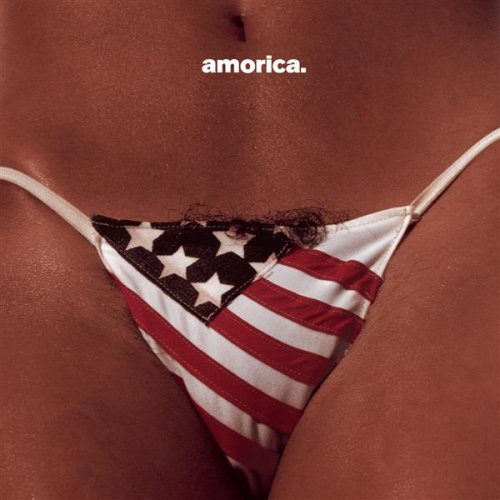
#26: The Black Crowes - Amorica

Release Year: 1994

The Black Crowes' first two albums, Shake Your Money Maker and The Southern Harmony and Musical Companion, were both solid southern rock albums.  The demonstrated that they could write rock songs and ballads as well as anybody.  But they were somewhat lacking in depth.

With Amorica, that changed.  They started experimenting a little bit, and some folk influence started creeping in.  And we got a collection of songs that fit together better than either of their previous albums.  This is where the Crowes went from being just another guitar rock band to being real artists with a truly interesting contribution.

Lest you think they ceded their ability to write solid rock songs, their riffs are as good as they ever were.  But there are more dynamics, and the softer parts are more textured, and feature more acoustic instrumentation.

Every time I hear this album, it throws me into another Black Crowes kick.  This is the best early Crowes album, and one of my favorites of the 1990s.

Standout tracks:
  • Wiser Time
  • Descending
  • Nonfiction
  • A Conspiracy 

Wednesday, September 28, 2011

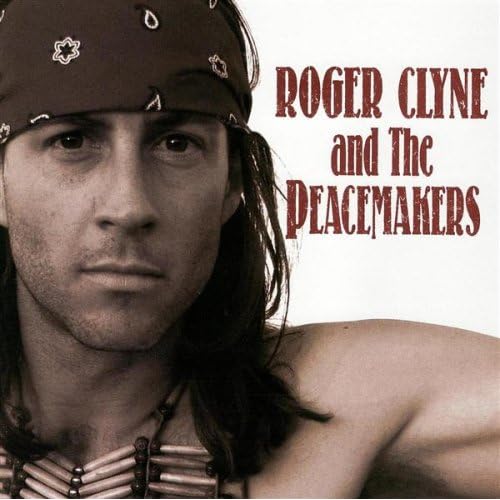
#27: Roger Clyne & The Peacemakers - Sonoran Hope and Madness

Release Year: 2001

The Refreshments were one of the most popular bands in Arizona in the mid-1990s.  They had hit songs on the radio and on television series.  After their 1997 record The Bottle and Fresh Horses, however, the band split, and singer/songwriter Roger Clyne and drummer P.H. Naffah regrouped under the moniker "Roger Clyne & The Peacemakers."  This band, while similar in some respects to The Refreshments, had a more Americana feel.

Their sophomore album, Sonoran Hope and Madness, is the quintessential Arizona record.  It marries Clyne's time spent on his uncle's ranch in Tucson with his suburban Tempe upbringing, and the result is a record that captures the Zeitgeist in turn-of-the-millenium Arizona.  Here we have a city rapidly growing into a metropolis, yet struggling to somehow retain its rural attitude.

That's the theme of this album, and that's why I like it.  Here we have Clyne at his songwriting pinnacle, and his storytelling was as good as ever.  The themes are distinctly Southwest: songs about trailer parks, murder in Mexican villages, diversity and tolerance, and the transition from farmlands and ranches to stucco and highways.  Even the interlude, an instrumental "Home on the Range," evokes a yearning for open spaces.

To perfect the motif, the album is bookended by something else that is a critical aspect of Arizona youth: bottle rockets.

RCPM would gradually get less creative and less introspective after this album, but this one might go down in history as Clyne's magnum opus.

Standout tracks:
  • Buffalo
  • Better Beautiful Than Perfect
  • Colorblind Blues
  • Mile High and Risin' 

Tuesday, September 27, 2011

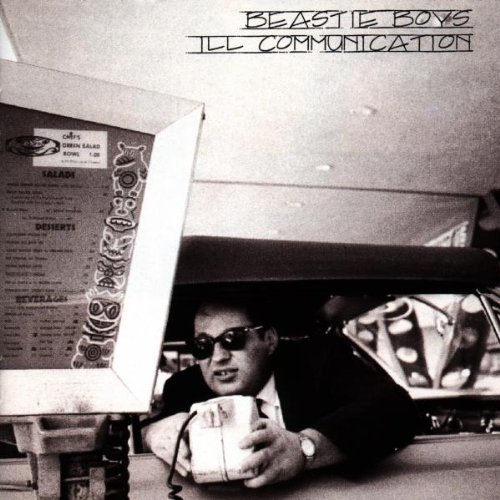
#28: Beastie Boys - Ill Communication

Release Year: 1994

Beastie Boys are an interesting sort of rap group.  White people love them, and they started out as a hardcore punk outfit.  License to Ill and Paul's Boutique were two of the most influential rap albums of the 80s, and they pretty much wrote the book on sampling with the latter.

For me, though, Ill Communication is where they shine the most.  This album has style.  With this one, they focused more on music then with any of their previous records; that's why it has no shortage of instrumental tracks, and most of the vocals are distorted.  I'm not sure what message they were trying to send by doing this, but I like it.

This is more Beastie Boys as musicians than Beastie Boys as emcees.  While I don't like the two hardcord punk tracks on this album, I appreciate their role in showing us their roots.  One of my favorite tracks here, "Bodhisattva Vow," has a cool Indian feel to it.  And "Get It Together," one of the few straight raps, featuring Q-Tip, just flows beautifully.  The Beasties peaked at this album; each studio album following this got progressively less awesome.

Standout tracks:
  • Get It Together
  • Bodhisattva Vow
  • Do It
  • Root Down 

Monday, September 26, 2011

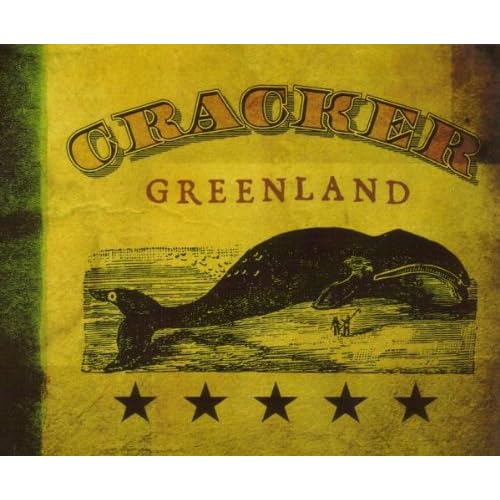
#29: Cracker - Greenland

Release Year: 2006

Years ago (about four of them), when I finally decided to check out Cracker, I downloaded two of their albums: Kerosene Hat and Greenland.  Hat had their hit song "Low," and a few other recognizable tunes, like "Eurotrash Girl" and "Lonesome Johnny Blues."  On the surface, you'd think that would be the better of the two records, and while it is very good, it was Greenland that really stood out to me as a great record.  While it did not spawn any hits, it was very cohesive, had a distinct sound, and had very well-written songs.

This is the record that most perfectly blended their California punk rock attitude with their country tendencies, creating a stunning meld of Americano-tinted folk rock that proved that these guys aren't just alternative rock has-beens.

This album is mellow, but upbeat.  It doesn't have any punk anthems like "I Hate My Generation" or "Teen Angst," but it does have a couple of loud, riff-driven songs.  This will go down, in my mind, as one of the most underrated albums of the decade.  It is Cracker's best album, and their most consistent since The Golden Age.

Standout tracks:
  • Sidi Ifni
  • Where Have Those Days Gone
  • Everybody Gets One For Free
  • Fluffy Lucy 

Sunday, September 25, 2011

#30: Neil Young - Time Fades Away

Release Year: 1973

In 1973, Neil Young was hot off his hit record, Harvest, which is probably his most successful album ever.  While touring in support of that album, he was trying to play the songs he wanted to play, with a band he was not comfortable with, to audiences who just wanted to hear Harvest.  The result is Neil Young's live album Time Fades Away, which is, to this day, (officially) only available on vinyl.  Neil hated the tour, and the shows where these songs were recorded, but released it "so you could see what could happen if you lose it for awhile."

What happened is a great collection of songs.  There are a few classic Neil Young guitar rock songs, reminiscent of Crazy Horse.  There are three piano ballads ("Journey Through The Past," "Love In Mind," and "The Bridge") which make this album really work.  And it closes with a longer, upbeat track more in the vein of "Cowgirl" called "Last Dance."

There are all kinds of great Neil Young records to choose from, but this is one that stands out for its rawness, its history, and, also somewhat importantly, its music.

Standout tracks:
  • Last Dance
  • Journey Through The Past
  • Don't Be Denied 

Friday, September 23, 2011

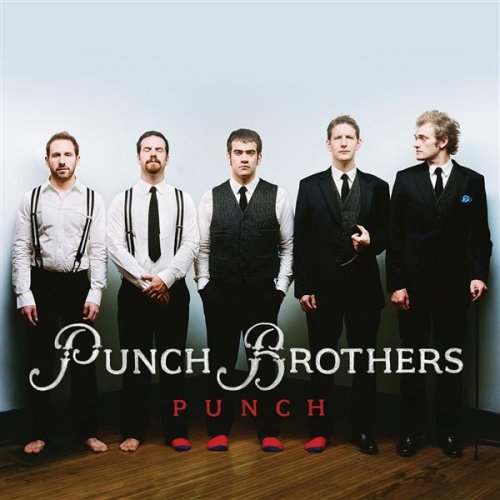
#31: Punch Brothers - Punch

Release Year: 2008

Punch Brothers are one of my favorite bands.  The musical talent and creativity these guys have is paramount.  They were formed by Chris Thile (of Nickel Creek fame) as a vehicle to record the 40 minute long suite he composed called "The Blind Leaving The Blind."  They went ahead and recorded an album of covers and original songs called How to Grow a Woman From the Ground, and then, a couple years later, finally went into the studio to record the suite.  Punch is the result.

The one thing I value most in music is originality.  An album can have great songs, but if it doesn't bring anything new to the table, its ceiling is a lot lower.  Punch is about as unique as it gets...how many albums are there with bluegrass instrumentation, while being centered around a jazz and classical music influenced four-movement suite?  This is certainly the only one I've heard.

Besides their phenomenal aptitude, and musical creativity, these guys just keep it interesting.  I've seen them three times now, and each show was completely different.  They might play their early material; they might play newer material; they might play some Beck, Radiohead, or Strokes; and they might even play some Bach.

Definitely check this one out if you like to be challenged.

Note: "The Blind Leaving the Blind" is the subject of an excellent new documentary called How to Grow a Band. I'm not sure if it's going to ever have a wide release, but it was a thoroughly engaging watch, and an interesting window into the trade-offs in trying to write the music you want vs. pleasing your audiences. I was fortunate enough to watch this documentary, and get a limited edition poster signed by the band.

Note 2: Check out the cover.  I just noticed that they're sorted from shortest to tallest, and also from least dressed to most dressed.  Awesome. 

 Standout tracks:
  • The Blind Leaving the Blind
  • Punch Bowl